
Table of Contents
ToggleThe Somme battlefield has haunted gaming landscapes for nearly two decades, serving as the stage for some of gaming’s most intense and historically-grounded multiplayer moments. Whether you’re diving into a Battlefield title or exploring WWI-inspired shooters, understanding what makes the Somme tick, both historically and mechanically, separates veterans from cannon fodder. This guide breaks down the real history behind one of WWI’s deadliest offensives, explores how major gaming franchises have adapted it, and equips you with the strategies you need to dominate every match. If you’re serious about controlling objectives, coordinating your squad, and extracting every advantage from this sprawling map, you’re in the right place.
Key Takeaways
- The Somme battlefield map demands squad-level coordination and objective-focused play rather than lone-wolf gunplay, with team communication and positioning separating veterans from casual players.
- Understanding Somme map geography—including trenches, open grassland, wooded areas, and objective zones—enables tactical exploitation of chokepoints, sightlines, and flanking routes for strategic advantage.
- Vehicle management is critical; tanks and helicopters function as team assets requiring infantry support and coordinated threat response, with poor vehicle execution costing matches despite spawning advantage.
- Spawn point control through squad spawning mastery and strategic respawn timing maintains numerical superiority in contested areas, directly impacting match outcomes more than individual kill counts.
- Standardized callouts, anticipatory communication, and class-based synergy (Assault, Medic, Support, Scout) transform team effectiveness on the Somme battlefield, with disciplined communication preventing reactive scrambling.
- Competitive dominance stems from executing map awareness and objective control fundamentals consistently rather than raw gunplay skill, rewarding teams that adapt positioning, rotate defensive angles, and maintain aerial threat assessment.
Understanding The Somme: Historical Context And Significance
The Real Battle Of The Somme: One Of WWI’s Deadliest Offensives
The Battle of the Somme, fought from July to November 1916, stands as one of the most catastrophic military engagements in human history. British and French forces launched a massive offensive against German trenches near the Somme River in northern France, intended to relieve pressure on French forces at Verdun. The scale was staggering: over 60,000 British soldiers were killed on the first day alone, the deadliest day in British military history. By the battle’s end, approximately 1.2 million soldiers across all sides had been killed or wounded, with relatively little territorial gain to show for it.
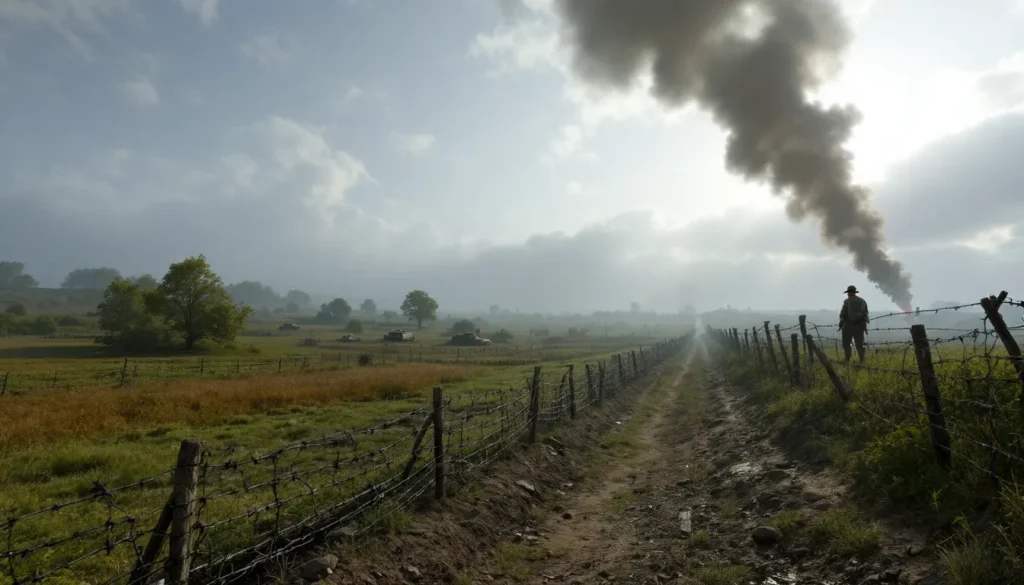
The trench warfare itself defined the Somme. Both sides dug elaborate networks of interconnected trenches, barbed wire entanglements, and fortified positions spread across rolling countryside. Artillery bombardments lasted days before infantry assaults, followed by brutal hand-to-hand combat in No Man’s Land. The stalemate nature of trench warfare, where defensive positions held nearly insurmountable advantages, meant that every meter of ground cost lives. Machine guns, artillery, and chemical weapons turned the Somme into an industrial-scale meat grinder that fundamentally changed how the world understood warfare.
The Somme represented the industrial nature of modern warfare in a way that previous conflicts hadn’t demonstrated so horrifically. It showed that tactical innovations, new technology, and overwhelming numbers didn’t guarantee success when defensive positions were properly entrenched and supplied. This historical weight is exactly why developers gravitate toward it.
Why Game Developers Chose The Somme For Iconic Maps
Game developers are drawn to the Somme for several compelling reasons. First, the terrain itself is naturally dynamic for gameplay. Rolling hills, trenches, abandoned vehicles, and destruction create vertical and horizontal gameplay layers that force interesting tactical decisions. You can’t just run through the middle, you need to use cover, coordinate with teammates, and respect sightlines.
Second, the historical gravitas adds narrative weight. Players know the Somme is real, that it mattered, that it killed millions. That authenticity translates into immersion. When you’re capturing an objective at Delville Wood or fighting through Thiepval, you’re not just playing a game, you’re engaging with a moment that genuinely shaped history. Developers recognize this psychological hook and lean into it heavily.
Third, the Somme’s scale and complexity make it endlessly replayable. A single battle or map area can be interpreted in multiple ways depending on the game’s genre, era, and design philosophy. You get grand conquest maps, tight objective-focused modes, and everything in between, all historically plausible within the Somme’s boundaries.
Finally, WWI itself has a mystique that resonates with hardcore gaming audiences. It’s often overshadowed by WWII in popular media, so when developers commit to authentic WWI settings, it feels fresher and more thoughtful than another WWII rehash. The Somme is the crowning achievement of that authenticity.
Somme In Popular Gaming Franchises
Battlefield Series Renditions Of The Somme
The Somme has appeared across multiple Battlefield titles, most memorably in Battlefield 1 (2016). DICE’s interpretation captures the essence of trench warfare while keeping gameplay balanced and fast-paced. The map features divided sectors: the German defensive line with fortified trenches and bunkers, open grassland creating vulnerability, and objectives scattered across the landscape to force movement and engagement.
In Battlefield 1’s Conquest mode, the Somme spans a massive playable area with multiple flag capture points. Vehicle spawns are distributed strategically, tanks favor the German side initially, while light vehicles and helicopters are available to both factions. The effectiveness of vehicles varies wildly depending on map control and team coordination, making vehicle play a genuine skill expression rather than a guaranteed advantage.
Domination variants of the Somme tighten the engagement zones, forcing closer-quarters combat in the trenches themselves. The tight spacing means grenades, shotguns, and SMGs become significantly more viable than they are on the conquest version. Positioning in these condensed areas becomes everything, controlling a trench section often determines which team controls the objective.
Operations mode in Battlefield 1 uses the Somme as a primary setting, with attackers pushing against defender positions across multiple sectors. This asymmetrical gameplay type showcases how the historical reality of the Somme, defenders holding fortified positions while attackers push forward, translates into competitive gaming scenarios. Defenders have structural advantages but limited spawning options, while attackers have numerical superiority but must coordinate movement.
Other Battlefield titles have included Somme-inspired maps or references, though none have matched the historical fidelity and gameplay depth of Battlefield 1’s version. The map became iconic enough that it’s often cited as a gold standard for multiplayer map design in historical shooters.
The Map In Other Major Gaming Titles
Beyond Battlefield, the Somme appears in various forms across the gaming landscape. Verdun and Tannenberg, specialist WWI shooters, feature the Somme prominently with extreme historical accuracy. These games strip away some of Battlefield’s arcade sensibilities and lean hard into period-authentic weaponry, slower TTK (time-to-kill), and realistic ballistics. Players engaging with these titles experience a fundamentally different playstyle than they would in mainstream shooters.
MMORPGs and strategy games have also touched the Somme. Games like Total War series occasionally feature Somme-related campaigns or historical scenarios. Real-time strategy games use the Somme as a historical reference point for asymmetrical faction design and trench warfare mechanics.
Independent developers have created experiential games focused on the Somme’s human cost. Games like Everyman’s War attempt to contextualize the gameplay within the historical horror, forcing players to confront the disconnect between game mechanics and actual human suffering. These titles represent a growing segment of games that use the Somme as a vehicle for historical education and emotional reflection rather than pure entertainment.
The Somme’s prevalence across multiple genres and studios speaks to its cultural weight and mechanical flexibility. It can be adapted to support everything from arcade gameplay to simulation, from competitive multiplayer to narrative-driven single-player experiences. Few historical events offer that range.
Map Layout, Strategy, And Gameplay Mechanics
Key Locations And Zones On The Somme Map
Understanding map geography is non-negotiable for competitive performance. The Somme’s layout typically divides into distinct regions:
Trenches and Fortifications: The German defensive line features interconnected trenches, sandbag fortifications, and bunkers. These areas are defensible but restrictive, you’re funneled into predictable paths, making grenade spam and explosive effectiveness peak here. Attacking teams need coordinated advances, suppressive fire, and combined arms to push through.
Thiepval or Central Objectives: Usually positioned in contested ground between the trenches and open field. Control here is volatile, whoever establishes position first has temporary advantage, but it’s exposed enough that sustained holding requires team support. Snipers can dominate these zones if enemy team doesn’t contest with effective counter-sniping or flanking.
Open Grassland: The “No Man’s Land” equivalent. Minimal cover, maximum vulnerability. Sprinting across here without cover is suicide: successful players move vehicle-to-vehicle, tree-to-tree, or in coordinated squad rushes. This space eliminates casual play, either you’re tactical or you’re respawning.
Delville Wood or Wooded Areas: Dense vegetation providing concealment but limiting sightlines. Close-quarters weapons excel here: ARs with short-range optimizations dominate over long-range rifles. Teams can set up ambushes or use the cover to flank exposed positions. Audio cues become critical since visibility is compromised.
Vehicle Spawns and Support Areas: Typically on faction-controlled territory edges. Tank spawns favor dominating teams initially, while helicopter spawns become available as combat progresses. Controlling these areas without actually being there (area denial) prevents enemies from accessing reinforcements.
Effective players memorize how these zones interconnect, understanding chokepoints, sightlines, and flanking routes. Popular gaming guides often detail specific callout names for these locations, helping teams communicate efficiently.
Strategic Positioning And Tactical Approaches
The Somme doesn’t reward lone-wolf play. Its size and layout demand squad-level coordination and larger team strategy.
Trench Holding: If your team controls the German trenches, your job is defending depth. Don’t camp the front line, occupy secondary and tertiary positions where you can trade health for kills safely. The first enemy through gets overwhelmed: the fifth or sixth picks up easy kills from angles. Rotate positions after getting two-three kills from one spot, forcing attackers to reset.
Mid-Game Control: As the match develops, controlling central objectives becomes paramount. Teams that establish presence at the map’s midpoint can exert pressure on both enemy flanks. This requires splitting focus, leaving insufficient force at any one point is risky, but concentrating all forces makes you predictable and exploitable.
Flanking Philosophy: The Somme’s size encourages aggressive flanking. Teams that identify under-defended routes and push through them can collapse enemy positions from unexpected angles. But, overextending on flank attempts leaves your main force under-staffed. Effective flanks require timing, pushing when main force has enemy attention, not before.
Vehicle Placement: Tanks should stay in areas where they have escape routes and supporting infantry. Pushing a tank into unsupported territory means it gets disabled and abandoned. Helicopters work best when keeping distance from small-arms fire while supporting ground forces. Bad helicopter pilots hover over enemy positions, becoming easy targets: good ones maintain altitude and circle.
Objective Timing: Capturing points matters more than kills. A team with 2-0 objective advantage but 10-15 fewer kills is winning. Coordinate captures with your squad, hit objectives when you have man advantage, hold them when you have numbers, abandon them when surrounded. Dying in a failed objective assault costs respawn time and map pressure simultaneously.
Vehicle Spawns, Loadout Optimization, And Class Selection
Vehicles in the Somme are force multipliers, not guarantees. Spawn timing typically follows match progression: initial spawns favor one faction, then balance shifts as match develops.
Tank Strategy: Tanks excel in open grassland and against clustered infantry. Anti-tank classes (Assaults with AT grenades or Supports with specific gadgets) are your hard counters. Stay mobile, don’t become a static target. Use terrain for hull-down positions where enemies can’t effectively shoot your weak spots. A good tank driver bounces between positions frequently, prevents spawning predictability, and retreats when facing combined anti-tank attention.
Helicopter Employment: Helicopters are scouting and support tools more than kill-farming machines. Keeping alive and providing gun runs is more valuable than chasing frags. When helicopters focus on kills over providing cover, ground teams lose aerial support exactly when they need it.
Infantry Class Loadouts: Competitive FPS guides recommend class-specific configurations tailored to expected engagement range. Assaults (close range, area denial) use SMGs with high hip-fire accuracy and explosives. Medics push aggressively with carbines, reviving downed teammates to maintain pressure. Supports provide ammo and suppressive fire with LMGs. Scouts keep distance with bolt-actions or high-damage semi-autos.
Weapon Selection: In Somme’s varied range environment, loadouts should be matchup-aware. Squads pushing trenches? Bring close-range orientations. Defending open grassland? Long-range precision weapons punish careless advances. Teams with mixed range coverage outplay teams locked into single approaches.
Gadget Choices: AT grenades, trip mines, claymores, and anti-tank grenades counter vehicles. Smoke grenades enable objective rushes through exposure. Periscopes and flares provide reconnaissance. Squad synchronization of gadgets multiplies effectiveness exponentially, coordinated throws overwhelm reactive defenses.
Winning Strategies For Domination, Conquest, And Other Game Modes
Tips For Infantry-Heavy Teams
Not every match features balanced vehicle distribution. Sometimes your team spawns without tank access early, forcing infantry-centric gameplay. This isn’t a disadvantage if executed properly.
Suppression Tactics: LMG-wielding Supports laying fire over objectives force enemies into cover, preventing effective counterattacks. Sustained suppression, not kills, is the objective. Suppressed enemies deal 25% reduced damage, miss more shots, and become vulnerable to coordinated assaults. A Support laying suppressive fire while two teammates push creates overwhelming odds.
Grenade Coordination: Grenades are underutilized by casual players. Coordinated grenade timing (three grenades into an objective simultaneously) clears defensive positions faster than rifle fire. Fuses are roughly 4-5 seconds, so you need squad discipline, everyone throws at the same moment so defenders can’t clear sequentially.
Objective Point Capture: Multiple people on a capture point speeds progression dramatically. Three players capture an objective three times faster than one. Organizing squad spawning near objectives ensures you maintain numerical advantage during capture windows. As soon as point hits 50% capture, rotate one player to suppress reinforcements while others finish.
Defensive Anchoring: When defending heavily populated objectives, position yourself where you have cover and sightlines to both the objective and approach routes. Let attackers come to you rather than chasing kills away from objectives. A single dedicated defender often holds longer than multiple players spread across the map.
Squad Spawning Advantage: Squad spawning is critical. A dedicated squad lead maintains nearby defensive positions, allowing dead teammates to rejoin combat within seconds. This creates a cascading respawn advantage, your team always has numerical superiority in contested areas because respawn times are functionally eliminated.
Vehicle-Focused Strategies And Helicopters
When vehicles are available, treating them as team assets rather than personal kill-farming tools transforms matches.
Tank Assault Coordination: A tank pushing forward should have infantry support. Dedicated infantry handles anti-tank threats while the tank provides firepower. Conversely, infantry clearing enemy anti-tank positions enables tank advances. This symbiotic relationship is why vehicles in good hands dominate matches, they’re not soloing, they’re leading supported advances.
Helicopter Air Support: Helicopters excel at suppressive fire and area denial. Gun runs on clustered enemies force repositioning. Keeping helicopters alive and available is often more valuable than constant combat since their mere presence forces enemies into suboptimal positions. A helicopter making three gun runs over a match affects 15+ kills worth of disruption even if it only scores 2-3 direct kills.
Vehicle Denial: If the enemy has superior vehicles, denying their spawns matters enormously. Keeping pressure on vehicle spawn locations prevents them from deploying, which sounds impossible but often works, vehicles spawn predictably, and anti-tank teams can suppress spawns. Even if you don’t destroy incoming tanks, forcing delay means they miss critical early-game capture windows.
Transport Mechanics: Sometimes vehicles aren’t combat machines, they’re transportation. Light vehicles can rush objectives, deliver troops under fire, then extract. Squad spawning combined with vehicle transport means squads reach unexpected flanking positions faster than enemies expect. This works until enemies anticipate it, then adapt accordingly.
Helicopter Persistence: Keep helicopters alive by maintaining altitude and distance from small-arms fire concentration. Experienced pilots circle threats rather than hovering. They know when to pull back after taking damage, preserve their presence for critical moments, and extract before enemy team gets organized anti-air response. In-depth FPS loadout guides discuss vehicle optimization in extensive detail.
Common Mistakes And How To Avoid Them
Overextending And Getting Flanked
The Somme punishes overextension brutally. Its size means flanking routes always exist, and ambitious pushes without map awareness end in squad wipes.
The Flank Trap: Teams pushing aggressively lose sight of their flanks. An attack into the German trenches that succeeds initially collapses when enemies flank through wooded areas or secondary trench routes. Always maintain awareness of what’s happening on your sides and behind. If you’re attacking with infantry, you need rear security, players watching approaches and providing suppression if enemies flank.
Predictable Routes: Repeatedly using the same attack path makes you predictable. After dying twice to the same sniper position, change approach. Alternate between direct assaults and wide flank movements. Enemies preparing counter-ambushes rely on your consistency.
Solo Pushing: Running forward alone might net a kill or two, but you’ll die before accomplishing objectives. The Somme demands squad-level play. Stay with teammates, coordinate movement, and attack simultaneously. One person can’t hold an objective: four people can.
Separated Squads: Spawning randomly instead of squad spawning fractures your team. Some players respawn near vehicles, others near distant objectives, others near dead teammates. This dispersal means you never have enough people for overwhelming force when you need it. Establish clear spawn points and use squad spawning to maintain cohesion.
Vehicle Mismanagement And Team Coordination Failures
Vehicles cause more losses than they enable for teams that don’t understand them.
Abandoned Vehicles: A tank pushed forward without support gets disabled and abandoned. The enemy captures it and uses it against you, converting a potential advantage into enemy asset. Vehicles need infantry escort, it’s that simple. If you’re driving a tank, stay near infantry. If you’re infantry, protect vehicle drivers.
No Vehicle Denial: When enemies respawn a tank, your team ignores it. The tank grows more powerful as match develops, eventually controlling engagements. Organize anti-tank response the moment enemy vehicles spawn. Even if you can’t destroy them, suppressing spawns delays their entrance into match.
Poor Helicopter Awareness: Helicopters go unchallenged because teams don’t organize counter-air response. Designate a player with homing missiles or coordinate ground fire when helicopters appear. A helicopter that goes unchecked for three minutes determines match outcome.
Vehicle Focus Over Objectives: Teams become obsessed with destroying enemy vehicles and lose sight of capturing points. The Somme’s Conquest mode is point-driven, you win by controlling more flags longer, not by having superior K/D. A team that ignores vehicles but caps two flags while enemies are distracted wins decisively.
Inadequate Vehicle Training: Players jump into tanks without practicing controls, leading positioning, or escape timing. They get instantly destroyed, cost the team respawn time and vehicle availability. If you’re new to vehicle play, practice in non-competitive matches. Vehicle competence is learnable and directly impacts match outcome.
Communication Breakdown: Teams that don’t callout enemy positions, request support, or coordinate timing fail catastrophically. “Tank on left ridge” is infinitely more valuable than “tank north” because “north” is vague. Practice specific callout names for map locations, Thiepval, Wood, Trenches, etc., so communication is instantaneous.
Advanced Gameplay Tips For Competitive Play
Spawn Point Control And Map Awareness
Competitive players dominate the Somme through spawn point manipulation and constant map awareness.
Squad Spawn Mastery: Squad leads anchor positions that teammates spawn into. Establish your squad spawn in locations near objectives but secure enough to survive. Your spawn point determines squad respawn time, a spawn in a defended area lets dead teammates rejoin in seconds: a spawn in enemy territory means they die instantly after spawning. Position squad spawns strategically, relocate them as threats shift, and destroy enemy squad spawns to deny their respawn advantage.
Minimap Discipline: Competitive players glance the minimap constantly. You should know where teammates are, where objectives are, and approximately where enemy fire is coming from. The Somme is large enough that minimap monitoring is critical, you can’t see threats directly, but the minimap reveals them. Enemy icons on the minimap mean threats: no icons mean space is clear.
Flag Placement: On Conquest, knowing who holds which flags determines strategy. If your team holds three flags and enemies hold two, your focus is defending and maintaining control, not chasing aggressive kills. If enemies hold three, you’re constantly attacking and trying to flip control. Objective status drives decision-making, experienced teams never lose sight of who’s winning on the scoreboard.
Position Rotation: Staying in one location makes you predictable. After getting two-three kills from a position, move to another sightline. Enemies learn your pattern and counter-position. Rotating keeps enemies guessing and prevents them from stacking overwhelming force against known positions.
Vehicle Threat Assessment: Competitive players immediately identify incoming vehicles and organize response. Helicopter spawning? Expect it in 30 seconds and designate counter-air. Enemy tank just spawned? Three people lock anti-tank roles and focus fire. This rapid threat assessment and response is the difference between competitive play and casual matches.
Communication, Callouts, And Team Synergy
Competitive teams separate themselves through communication discipline.
Standardized Callouts: Teams need agreement on location names. Thiepval, Delville, Trenches, Grassland, etc., everyone calls the same location by the same name. “Enemy at point” is useless: “three enemies in trench section alpha” is actionable. Practice callout consistency in non-competitive matches so competitive matches feel natural.
Kill Callouts: When you damage or kill an enemy, callout their position and status. “One enemy low health near Thiepval” enables teammates to finish kills or avoid engagement. “Contact at wood, three players” lets teammates know to expect resistance and approach cautiously. Constant communication prevents surprise engagements and friendly fire.
Objective Coordination: “Moving on point, need support” initiates team response. “Falling back from trench, need suppression” triggers defensive positioning. “Flanking left, go right” coordinates pincer attacks. Specific, action-oriented communication means everyone understands the plan and executes simultaneously.
Noise Discipline: Some teams communicate constantly without useful information, nervous chatter during tense moments creates communication overload, making critical callouts get lost. Communicative discipline means only relevant information during high-tension moments, then fuller communication during downtime.
Reinforcement Callouts: “Tank spawning in ten seconds” lets teammates position accordingly. “Helicopter inbound” triggers counter-air prep. “I’m reviving teammate near objective” tells nearby players to suppress enemies. Anticipatory communication prevents reactive scrambling.
Class Coordination: Squads with mixed classes play better than squads of identical classes. Assault, Medic, Support, Scout, each brings capabilities the others lack. Communication needs to emphasize synergy: “I’m throwing smoke, Medic pushes through and revives, Assault clears the position.” This pre-planned coordination exploits class strengths.
Respawn Timing: Communicating respawn waves prevents staggered arrivals where few players reach objectives. “All die on three, respawn squad left” means everyone coordinates respawn timing so you hit the next objective push with full squad strength instead of trickling in one-at-a-time.
Competitive dominance on the Somme comes from executing these fundamentals consistently. Veterans aren’t necessarily better at gunplay, they’re better at reading maps, communicating precisely, and acting as a unified force. Map knowledge, awareness, and team synergy trump raw aim in objective-focused gameplay.
Conclusion
Mastering the Somme isn’t about grinding hours until you memorize every pixel. It’s about understanding the map’s flow, respecting team coordination, and recognizing how vehicle play, objective control, and communication multiply individual skill into dominating performance.
The Somme’s historical weight, one of the deadliest military engagements ever, translates into gameplay depth. Developers crafted a map that demands respect, rewards planning, and punishes careless aggression. Whether you’re playing Battlefield 1 or another WWI title, these principles hold constant: control the center, coordinate with teammates, adapt to vehicle threats, and maintain awareness of what’s happening across the entire battlefield.
Start with the fundamentals: learn callouts, practice squad spawning, and focus on objectives over kills. Once those feel automatic, layer in advanced positioning, vehicle exploitation, and map rotations. The progression from casual to competitive isn’t about finding a secret strategy, it’s about executing known principles better and more consistently than your opponents.
The Somme will keep challenging you. Maps this large and layered never feel mastered. But that’s the appeal. Each match reveals new angles, forces fresh decisions, and rewards teams that communicate and adapt. That’s why it’s iconic, why developers keep revisiting it, and why competitive players keep returning to it.


