
Table of Contents
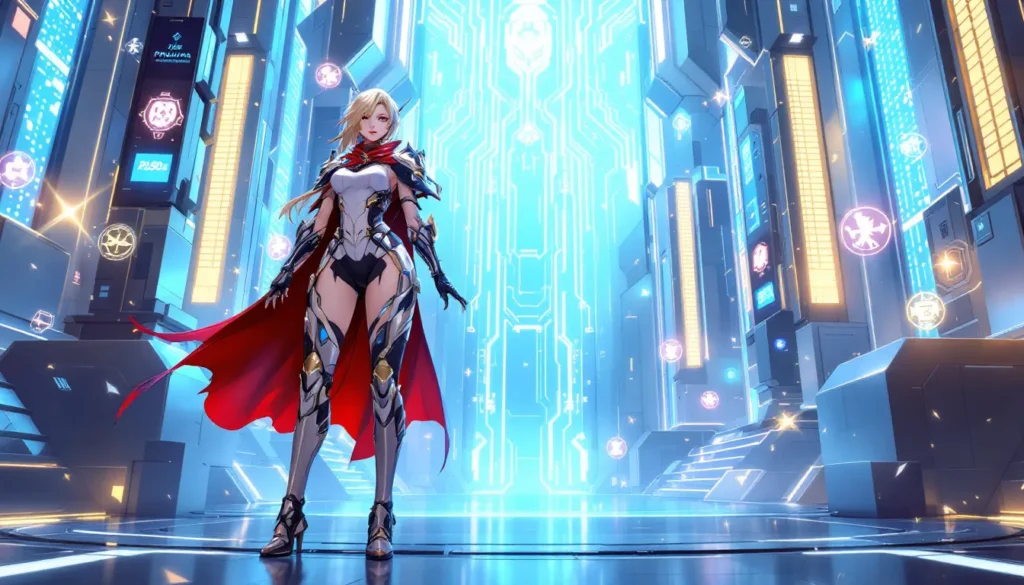
ToggleSandrone arrived in Genshin Impact as one of Fontaine’s most intriguing characters, blending elegant design with a kit that rewards precision and planning. Whether you’re exploring the Archon Quest or pushing Spiral Abyss, understanding how Sandrone works, from her elemental mechanics to optimal team compositions, makes the difference between a wasted slot and a game-changer. This guide breaks down everything you need to know about building her, using her effectively, and making her work in the endgame content that matters.
Key Takeaways
- Genshin Impact Sandrone is a Pneuma-aligned catalyst user who excels in burst-centric teams that coordinate her elemental skill and damage windows with compatible teammates like Fischl and Nahida.
- Energy Recharge should sit between 140–160% while prioritizing Elemental Mastery (200+), Crit Rate/Damage balance, and Pneuma elemental damage bonus to unlock her kit’s full ceiling.
- Sandrone’s Elemental Burst is her defining feature, delivering 2.5–3.5x her standard damage output over 12 seconds and scales from current stats rather than snapshots, making buff coordination critical.
- Artifact sets like Gilded Dreams (main-DPS) or Emblem of Severed Fate (sub-DPS) paired with weapons like The Widsith or Lost Prayer maximize her damage, while weapon choice directly impacts Elemental Mastery scaling.
- In Spiral Abyss, Sandrone performs best against single-target and Pyro/Cryo-heavy floors but struggles with Electro shield mechanics, making team composition and enemy matchups crucial to her viability.
- Sandrone’s Pneuma mechanics enable cascading elemental reactions when paired strategically with Ousia-aligned characters, but casual play without deliberate coordination fails to extract maximum damage potential.
Who Is Sandrone and What Role Does She Play?
Sandrone’s Background and Lore
Sandrone is a Fatui Harbinger with a mysterious past tied directly to Fontaine’s political intrigue. She appears in the main storyline as a complex antagonist whose motivations extend beyond simple villainy, her connection to Fontaine’s Archon Neuvillette and the region’s mechanical heritage makes her presence significant to the overall narrative. Within the game’s world, she’s known for her precision engineering and calculated approach to problem-solving, traits reflected in her combat design.
Her appearance and demeanor emphasize elegance and control. Unlike other Harbingers who rely on brute force, Sandrone’s approach is methodical, creating a character whose gameplay mirrors her personality. The developers clearly intended for her kit to feel deliberate and rewarding for players who master her mechanics rather than rely on button-mashing or auto-attacks.
Her Significance in the Fontaine Storyline
Within the Fontaine chapter, Sandrone’s role expands beyond a simple boss fight. She represents the intersection of Fatui ambition and Fontaine’s unique mechanical culture, making her essential to understanding the region’s conflicts. Her involvement in major plot points ties directly to revelations about Fontaine’s underwater sections and the Primordial Ocean storyline, positioning her as more than just an obstacle.
For gameplay purposes, her inclusion as a playable character signals HoYoverse’s commitment to developing characters that matter narratively. Unlike some characters introduced purely for roster diversity, Sandrone carries weight in the story, which often translates to better future support and relevance in event content. If you’re invested in Fontaine’s story and the ongoing Harbinger subplot, pulling for Sandrone makes narrative sense alongside gameplay considerations.
While reviewing Hot Genshin Impact Characters on our site, Sandrone consistently ranks high among players prioritizing both story investment and combat viability.
Sandrone’s Character Design and Combat Mechanics
Vision Type and Elemental Skills
Sandrone wields a Pneuma vision, making her a Pneuma-aligned character in Genshin Impact’s updated elemental framework. This designation is crucial because it affects her interactions with Fontaine’s unique Pneuma/Ousia mechanics introduced in patch 4.0 and beyond. Her Elemental Skill deploys mechanical constructs that can trigger Pneuma reactions when coordinated with compatible teammates.
The core function of her Elemental Skill is displacement and positioning control. Activating it creates objects or fields that enemies must navigate around or through, and breaking these constructs generates energy particles that feed her burst meter. Against large groups, her skill scales better than single-target damage: it’s built for arena control rather than peak damage spikes. The skill’s cooldown sits at a reasonable 12 seconds, meaning consistent uptime in extended fights.
Pneuma alignment opens specific reaction pathways. In teams where another Pneuma character handles primary damage, Sandrone can trigger cascading effects that multiply damage output. Without proper Pneuma synergy, her kit functions but doesn’t unlock its ceiling. This is a critical distinction between casual use and optimized builds.
Weapon Type and Stat Priorities
Sandrone uses a catalyst as her primary weapon, placing her in the caster archetype. This affects her stat priorities significantly. Unlike sword or claymore users who benefit from attack-speed scaling, catalyst users prioritize Elemental Mastery and Energy Recharge early in their builds, with Critical Rate/Damage becoming secondary priorities depending on artifact rolls.
For main-DPS builds, you’ll want to hit specific breakpoints. Energy Recharge should sit between 140–160%, depending on team composition and particle generation. Without adequate ER, her burst, which powers her damage windows, cycles too slowly. Attack should be around 1800–2000 after buffs and weapon scaling, which sounds high but reflects catalyst base stats being lower than polearms or swords.
Elemental Mastery isn’t a vanity stat on Sandrone: it directly boosts reaction damage. If you’re building her for Pneuma-reaction teams, aiming for 200+ Elemental Mastery alongside your other priorities will noticeably increase team damage output. The balancing act is real: too much EM and you’re sacrificing damage: too little and reactions feel weak.
Burst Ability and Team Synergy
Sandrone’s Elemental Burst is her defining feature. Activating it transforms her combat stance temporarily, granting enhanced normal and charged attacks alongside increased elemental damage. The burst costs 80 energy (standard cost) and lasts approximately 12 seconds before reverting to her normal state. During this window, her DPS floor rises dramatically, we’re talking 2.5–3.5x her standard damage output depending on gear.
The burst doesn’t snapshot stats: its damage scales from her current stats when the ability triggers. This means buffs and debuffs applied during the burst duration affect its damage. Coordinating Sandrone’s burst with Bennett’s buff window or Nahida’s Dendro application makes a measurable difference in team damage.
Team synergy revolves around two principles: energy battery support and reaction enablement. Characters like Fischl (if using Ousia) or Nahida (for Dendro reactions) pair naturally with her. The specific synergy depends on whether you’re building her as main DPS or sub-DPS, which changes partner priorities. Her burst window also creates opportunities for coordinated elemental damage, opponents vulnerable to Pneuma reactions during her active phase take amplified damage.
Best Builds and Equipment Recommendations
Artifact Set Recommendations
The optimal artifact setup depends on her team role. For main-DPS builds centering Sandrone’s damage, Gilded Dreams (4-piece) or Deepwood Memories (4-piece) dominate depending on whether you’re running elemental-reaction or sub-DPS focused compositions. Gilded Dreams rewards high Elemental Mastery, scaling her burst damage linearly with that stat. Deepwood Memories reduces enemy elemental resistance by 30%, benefiting the entire team, if you’re not using Nahida or another Deepwood user, Sandrone can slot this instead.
For sub-DPS or support-oriented builds, Emblem of Severed Fate (4-piece) becomes attractive. The 20% Energy Recharge bonus stacks with your main-stat ER grind, and Emblem’s burst damage scaling means over-investing in ER doesn’t feel wasted. With proper artifact rolls, you can hit 160% ER and still maintain 200+ Elemental Mastery, the sweet spot for Sandrone sub-DPS play.
Hybrid 2-piece combinations exist for flexibility. Pairing Instructor (2-piece) with Deepwood Memories (2-piece) works if you’re farming other domains. This grants 120 Elemental Mastery and 15% elemental damage, respectable placeholder stats while you hunt better pieces. Don’t overspend resin on perfect artifacts: good enough gear that’s actually equipped beats perfect gear stuck in your inventory waiting for upgrades.
Weapon Choices and Alternatives
The Widsith is the F2P-friendly gold standard. Its passive grants 60 Elemental Mastery (or damage/ATK) on a 10-second timer, and that EM boost aligns perfectly with burst windows. You might not always hit the Elemental Mastery proc, but the passive’s variance is part of the skillcheck.
Lost Prayer to the Sacred Winds stands as the premium choice if you have it. 32 Elemental Mastery on the weapon base, plus a stacking damage buff (3.5% per second, capping at 40% after 16 seconds) means her burst in prolonged fights hits harder than almost any alternative. The movement speed bonus is negligible for DPS, but it’s there.
A Thousand Floating Dreams is newer and situation-dependent. It grants Elemental Mastery and elemental damage bonus, scaling with how many different elements your team fields. In a Fischl + Nahida + Sandrone composition, you’re looking at +75 Elemental Mastery plus 20% elemental damage, competitive with Lost Prayer for burst damage without the passive uptime concerns.
Budget options include Skyward Atlas (if you have it) and Solar Pearl. Atlas’s raw attack stat and damage buff make it serviceable even if you’re not optimized. Solar Pearl is fine if you’re strapped for options, though its crit rate is wasted without a crit-scaling build.
Main Stats and Substats to Prioritize
Your main stats across artifacts should follow this hierarchy:
Sands: Energy Recharge or Elemental Mastery. If you’re at 140% ER already through substats and support characters, lean Elemental Mastery. Otherwise, lead with ER.
Goblet: Elemental Damage Bonus (matching her Pneuma alignment). ATK is a fallback if you can’t get a suitable Elemental Damage piece, but Elemental Damage is strictly better.
Circlet: Critical Rate or Critical Damage. Aim for a 1:2 ratio (e.g., 50% Crit Rate / 100% Crit Damage). If your other artifacts have poor crit rolls, a Crit Rate circlet patches it: if you’re lucky with substats, Crit Damage builds higher ceiling damage.
Substat priority: Crit Rate > Crit Damage > Elemental Mastery > Energy Recharge > ATK. No piece is worthless, even ATK substats add up, but these tiers reflect damage contribution. Avoid stacking flat HP, flat DEF, or flat ATK unless you’re desparate for survivability.
Team Composition and Synergies
Main DPS Teams Featuring Sandrone
Sandrone as primary DPS works best in mono-element or reaction-focused teams. A Fischl + Nahida + Sandrone + Bennett setup leverages Fischl’s off-field Pneuma/Electro application, Nahida’s Dendro enablement, and Bennett’s ATK buff. This team frontloads burst damage during Bennett’s window, then sustains with Fischl’s reactions. The Dendro-Electro-Pneuma interplay generates multiple reaction layers, multiplying damage across the board.
Alternatively, running Nahida + Fischl + Dendro/Electro Sub-DPS + Sandrone inverts the role slightly, Sandrone still deals primary damage, but she’s not always in field. This requires fast skill/burst cycles and Sandrone having adequate Energy Recharge (160%+) to maintain burst uptime. It’s mechanically demanding but rewards high-level play.
For budget or early-game variants, Fischl + Mika/ATK buffer + Sandrone + Healer strips out Nahida and leans on Fischl’s off-field damage. You lose reaction stacking but gain flexibility and faster farming times. This version is viable up to Abyss 9, then starts showing cracks against high-defense enemies.
Support and Sub-DPS Configurations
Sandrone as sub-DPS transitions to different team archetypes. Pairing her with Nahida-focused teams (Nahida + Fischl + Sandrone + Healer) keeps her burst-centric but shifts primary damage to Nahida. Sandrone’s role becomes “additional burst damage on off-field cycles.” This works, but it’s less impressive than a dedicated Dendro/Electro sub-DPS.
A freeze-team hybrid uses Sandrone alongside Cryo DPS (Ayaka, Ganyu) plus Hydro support (Kokomi, Yelan). Sandrone functions as off-field Pneuma damage, triggering freeze reactions on her own schedule. The issue: Pneuma mechanics are still niche, and this team underperforms compared to Electro Freeze variants. It’s viable but not optimal.
The archetype teams like National variants rarely need Sandrone specifically. But, if you’re building a second-abyss-half team and want Sandrone to slot in, she can. The reality is that her Pneuma alignment makes her work best with specific teammates rather than being universally flexible.
Resources on Genshin Impact Archives discuss team theory-crafting and helper guides for identifying optimal compositions based on your roster.
Elemental Reaction Strategies
Sandrone’s Pneuma alignment opens Pneuma Reaction chains. When a Pneuma character triggers Pneuma reactions on enemies, it creates cascading damage multipliers. Stacking this with Ousia-aligned partners (like Nahida in Dendro) generates reaction layers that compound damage.
Practically, this means:
- Use Fischl (Pneuma Electro) for off-field application while Sandrone is on-field.
- Trigger Nahida’s Dendro during Sandrone’s burst window to create multiple reaction instances.
- Coordinate burst timings so Sandrone’s active phase aligns with peak Nahida/Fischl uptime.
Without deliberate coordination, Pneuma reactions don’t trigger optimally, and your damage feels underwhelming. The skill ceiling is real: casual play doesn’t extract maximum value.
For reaction-specific strategies, game walkthroughs and meta builds often feature detailed breakdowns of Pneuma mechanics and reaction optimization, especially as new characters release and meta shifts.
Leveling and Ascension Materials Guide
Talent Leveling Priority
Your talent upgrade order should be:
- Elemental Burst (priority 1) – This drives her damage ceiling. Leveling burst from 6→9 increases damage by ~20%, a substantial return.
- Elemental Skill (priority 2) – Improves cooldown reduction and energy generation. Less impact than burst but still critical.
- Normal Attack (priority 3) – Unless you’re building main-DPS with heavy normal-attack uptime, this is a nice-to-have. Sub-DPS builds can skip this entirely.
Gold talent books come from the Pale Flame Domain on Tuesdays/Fridays/Sundays. Run it weekly until you have enough books to guarantee all three talents to 9 (or 8 if spending is limited). The talent level cap depends on your Ascension rank: 1→2 on base, capping at 10 with full Ascension 6.
Ascension Material Farming Locations
Sandrone’s Ascension materials drop from a weekly boss: Chi of Yao Liu (Natlan region, if you’re on recent patches). This boss appears weekly with a 3x claim limit per server. You’ll need 46 total Chi mats across all ascension ranks.
The local specialty for Sandrone is Chronochron Shards, found in Natlan’s cavern regions. These grow as blue crystal formations. Each ascension phase consumes 6 Chronochron Shards: plan 36 total. Farm them during downtime while doing dailies or other content.
Slime secretions (blue slimes) and Treasure Hoarder drops provide standardized mats. These aren’t location-specific but come from trash mobs throughout Teyvat. Run them passively while farming domains or other mobs.
Mora requirements scale steeply: expect 5.1 million Mora total to ascend Sandrone from 1→90 with talents 1→9. This isn’t unusual for 5-star characters but is worth planning if you’re low on reserves. Weekly domains and ley-line blossoms are your primary Mora sources.
Early-game players should prioritize Ascension 4 (unlocks burst damage scaling) before pushing to 6. Talent levels scale more linearly, so you can pause at 6 for burst and still function in most content. Endgame players will complete everything simultaneously, but resource scarcity makes prioritization necessary early on.
Build planning spreadsheets, available across game guides and resource sites, let you calculate exact material costs and farming timelines before committing resin.
Sandrone in Spiral Abyss and End-Game Content
Optimal Floor Strategies and Team Matchups
Sandrone’s Abyss viability depends on the enemy roster. Halls with Electro-heavy enemies (like Abyss magics or lectors) become problematic because Electro shields resist elemental damage, and Sandrone’s Pneuma alignment doesn’t bypass that. Pairing her with a shield-breaker (like Physical DPS or Hydro applicators) solves this, but it’s an extra team slot consumed.
Boss-heavy floors favor her burst-centric kit. Single-target fights where you can reliably predict burst timings and coordinate team damage let her shine. Floors with multiple separate bosses tested simultaneously punish her because her AoE coverage, while functional, doesn’t match dedicated cleave characters.
Optimal matchups include:
- Floors with Pyro/Cryo enemies (no shield concerns, high reaction damage).
- Single-boss encounters where you can plant burst optimally.
- Halls where your second team is Geo-heavy (so your Sandrone team doesn’t overlap element counters).
Worst matchups include heavy Electro shielding, multi-target spread layouts, and tight DPS checks where reaction setups are needed but don’t scale to the damage requirement. In these cases, benching Sandrone for a generalist DPS (like Hu Tao or Alhaitham) beats forcing her into unfavorable conditions.
Viability Against Current Enemies and Bosses
As of patch 5.0 (early 2026), Sandrone remains viable in Spiral Abyss 12 but doesn’t carry teams single-handedly. Her role is “solid team contributor” rather than “carry who can 36-star alone.” This is fine, most 5-star DPS characters occupy that space. She’s not outdated, but she’s not top-tier either.
Against Primordial Magus (one of the current Abyss bosses), she performs well. Reaction chains stack, and the boss’s layout doesn’t exploit her weaknesses. Against Abyss Lectors, her matchup is mediocre due to shield mechanics.
Boss-specific strategies matter. In the Golden Wolflord encounter, her reaction potential shines. Against Hydro hypostasis, elemental damage amplifies through reactions. For Cryo Hypostasis, she’s neutral but workable.
The honest take: Sandrone clears endgame content without issues if your artifacts are decent and your team synergy is understood. She’s not a “skip” character if you enjoy her playstyle, but she’s not a “must-pull” if your DPS roster is already solid. Resource commitment (weapon, artifacts, farming) should factor into your decision.
For detailed tier lists and matchup breakdowns updated with current Abyss lineups, RPG character guides and tier rankings provide context-specific recommendations.
Conclusion
Sandrone is a well-designed character whose ceiling matches her design, elegant, deliberate, and rewarding when executed properly. Her Pneuma mechanics tie into Fontaine’s narrative and provide unique team-building paths that feel distinct from older DPS characters. If you’re considering pulling for her, weigh her against your existing roster and upcoming banners. She’s not universally superior to established carries, but she’s excellent for players who value reaction depth and burst-window optimization.
Build her if you’re interested in exploring Pneuma mechanics or if you’re specifically drawn to her character. Skip her if you’re tight on resources and your DPS slots are filled. The math supports both decisions depending on your account state and priorities.
Fontaine continues evolving with each patch, and Sandrone’s relevance will shift as new allies release. For now, she’s a solid addition to any account that commits to building her properly. The guide above covers the framework: the rest is execution and adapting to your specific teammates and available resources.


