
Table of Contents
ToggleFort Griswold Battlefield State Park stands as one of Connecticut’s most significant historical sites, preserving the memory of a pivotal Revolutionary War engagement. Located in Groton, this park offers visitors a chance to walk through centuries of American history while experiencing well-maintained grounds and educational opportunities. Whether you’re a history buff, a casual tourist, or someone seeking outdoor recreation, Fort Griswold delivers on both educational value and scenic appeal. The park’s combination of authentic military earthworks, interpretive programs, and stunning vantage points makes it a worthwhile destination for anyone interested in understanding the American Revolution’s impact on New England.
Key Takeaways
- Fort Griswold Battlefield State Park preserves the September 6, 1781 Battle of Groton Heights, one of the Revolutionary War’s bloodiest engagements where American defenders inflicted significant casualties despite being outnumbered.
- The park features reconstructed 18th-century military earthworks with a pentagonal design and cannon placements that demonstrate colonial defensive engineering and offer visitors tangible connection to Revolutionary War tactics.
- Free admission to grounds, wheelchair-accessible main areas, and seasonal guided tours make Fort Griswold an accessible historical destination suitable for families, students, and serious history enthusiasts.
- The iconic 134-foot Monument to the Brave (erected 1825) and Monument House museum provide essential historical context, with the elevated vantage point explaining why this location was strategically crucial.
- Late spring and early fall offer ideal visiting conditions; plan 2-3 hours for guided tours, museum exploration, and scenic trails through the 34-acre park’s well-maintained grounds.
Understanding Fort Griswold’s Historical Significance
The Revolutionary War Battle of Groton Heights
The Battle of Groton Heights occurred on September 6, 1781, marking one of the bloodiest engagements of the Revolutionary War in terms of casualties per soldier. British forces under Major Edmund Bromfield led approximately 800 soldiers in an assault against a smaller American garrison of roughly 150 militia and volunteers. The Americans, commanded by Lieutenant Colonel William Ledyard, held the fort through intense fighting but were eventually overwhelmed by the British assault.
What makes this battle historically crucial is its context. By 1781, the British were attempting to maintain control over coastal Connecticut even though losing ground elsewhere in the war. The attack on Fort Griswold, then called Fort Ledyard, was intended to destroy American supplies and demoralize local resistance. Though the British captured the fort, the heavy casualties they sustained (around 40% of their force) and the fierce American defense demonstrated that colonial forces remained a formidable threat. Ledyard’s refusal to surrender without a fight became legendary: according to historical accounts, when finally forced to capitulate, his defiant stance cost him his life. This act of resistance resonated throughout the colonies and reinforced the narrative of American determination against seemingly overwhelming odds.
The battle’s aftermath rippled through the region. The British held the fort briefly before abandoning it, and the site became a symbol of colonial valor. Decades later, in 1825, the state dedicated the famous Monument to the Brave, a 134-foot granite obelisk, to honor the fallen soldiers. This monument remains one of Connecticut’s most recognizable landmarks and draws history enthusiasts from across the country.
Colonial Military Architecture and Design
Fort Griswold’s physical layout reflects the military engineering standards of the 18th century. The fort was originally constructed in the 1770s as part of a network of defensive positions designed to protect Connecticut’s vulnerable coastline from British naval and land attacks. Its earthwork fortifications showcase practical colonial engineering rather than elaborate European-style masonry.
The fort’s design centers on a pentagonal earthwork with bastions positioned to provide overlapping fields of fire. This layout allowed defenders to cover all approaches to the fort, crucial for resisting assaults from multiple angles. The use of earth and timber, rather than stone, reflected both budget constraints and the practical reality that earthworks were faster to construct and repair than masonry structures. Cannon placements on the bastions created a formidable defensive profile for a small garrison.
Visitors can observe how the original earthworks have been preserved and partially reconstructed. The ditches, ramparts, and embankments give a tangible sense of the fort’s defensive strength. Historical markers and interpretive signs explain the function of each fortification element. The design demonstrates that colonial military architects understood fundamental principles of defensive geometry, they positioned cannons to create interlocking fire patterns that would devastate any frontal assault. This wasn’t sophisticated by European standards, but it was effective and suited the colonial context.
Exploring the Park’s Layout and Key Landmarks
The Monument and Monument House
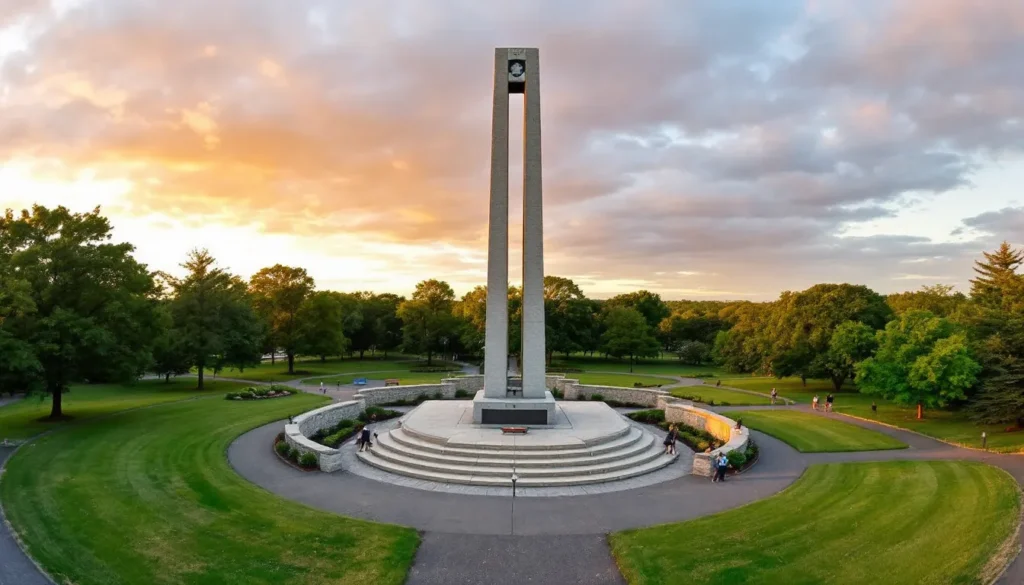
The Monument to the Brave is the park’s centerpiece and the reason most first-time visitors arrive. Standing 134 feet tall, this granite obelisk was erected in 1825 during the initial wave of Revolutionary War commemoration. The monument’s inscription honors the American soldiers who died defending the fort, though historical records from the 1790s and later confirm casualty figures around 50-70 Americans killed or mortally wounded out of the garrison.
The Monument House, located at the base of the obelisk, functions as the park’s visitor center and museum. Inside, you’ll find period artifacts, weapons, uniforms, and documents related to the battle and fort. The museum provides essential context before exploring the grounds, it’s worth spending 30-45 minutes here to understand what you’re about to see outside. Staff members are knowledgeable and happy to answer specific questions about military equipment or tactical details of the engagement.
From the monument’s base, visitors gain elevated views across the surrounding landscape. The vantage point helps explain why this location was strategically important during the Revolutionary War. The ability to see approach routes and the river below made it a natural fortification site. Modern visitors can clearly see why the British targeted this position, control of the high ground meant control of the coastal region’s military balance.
Fort Earthworks and Cannon Placements
The reconstructed earthworks are the park’s most tangible connection to 1781. Walking around the fort’s perimeter, you’ll see the original or reconstructed ramparts, bastions, and ditches. The main fort features clearly visible cannon stations where historical pieces have been placed. These aren’t purely decorative: they’re positioned exactly where 18th-century engineers would have placed them for maximum defensive coverage.
The fort’s pentagonal design becomes obvious as you walk the grounds. Each bastion corner would have held one or two cannons, with soldiers positioned behind earthen parapets. During the September 1781 battle, the Americans had limited artillery, the British assault came with superior numbers and heavy cannon support that American forces couldn’t match. Yet the American defenders held out long enough to inflict significant casualties, suggesting they used their earthworks effectively before being overwhelmed.
Historical reenactors occasionally conduct demonstrations during special events, showing how cannons were loaded, aimed, and fired. These events (typically spring and fall) attract history enthusiasts and offer immersive learning opportunities. Even without live demonstrations, the preserved earthworks give visitors a clear understanding of 18th-century military tactics and the physical demands soldiers faced while defending or assaulting the position.
Scenic Trails and Viewpoints
Beyond the main fort and monument, Fort Griswold Battlefield State Park offers several walking trails that wind through the surrounding grounds. The trails are well-maintained and accessible to most fitness levels, ranging from easy 10-minute walks to moderate 45-minute loops. They connect various historical markers and viewpoints scattered across the park’s 34 acres.
One trail leads down to the Thames River, offering perspective on the park’s location relative to colonial waterways. Water transport was critical during the Revolutionary War, the river provided both opportunity and vulnerability for coastal communities. Another section features views toward Groton Village, helping visitors understand the broader geographical context.
The most scenic overlooks provide unobstructed views across the surrounding landscape. These vantage points are particularly striking during fall when foliage colors peak. The park’s elevation and open spaces make it suitable for photography, and many visitors spend time capturing images of the monument, earthworks, and surrounding terrain. The trails are also quiet and peaceful, offering a contemplative atmosphere that contrasts with the violence and urgency that defined the 1781 battle.
Visitor Amenities and What to Expect
Operating Hours, Admission, and Accessibility
Fort Griswold Battlefield State Park is open year-round, though hours vary seasonally. From mid-May through mid-September, the park typically operates from 10 AM to 5 PM daily. During off-season months, hours are generally 10 AM to 4 PM with some variation based on weather and staffing. The park occasionally closes for maintenance or special events, so checking the Connecticut DEEP website before visiting is advisable.
Admission is free to the park’s grounds, though donations are encouraged to support maintenance and educational programs. The Monument House museum may charge a small fee during peak season ($3-5 for adults, discounts available for seniors and children), though this is often waived during shoulder seasons. Parking is plentiful and free in the lot near the visitor center.
Accessibility is generally good for the main areas. The Monument House and visitor center are wheelchair accessible, and paved paths connect the parking area to the monument and initial fort viewpoints. Some of the more remote trails involve steeper grades or uneven terrain, limiting accessibility in those sections. Visitors with mobility concerns should focus on the main monument area and nearby paved sections, which offer substantial historical content without extensive walking.
Best features: Free admission, well-maintained facilities, and informative staff. The main limitation is that the most interesting earthwork details require active exploration of unmarked terrain, which demands some physical capability and comfort with uneven ground.
Guided Tours and Interpretive Programs
The park offers seasonal guided tours led by knowledgeable historians and park staff. These tours run from late spring through early fall and are typically offered on weekends, though weekday tours can be arranged for groups. A standard guided tour lasts 60-90 minutes and covers the fort’s history, battle tactics, and architectural features. Tour guides explain the military context of 1781, the significance of the Revolutionary War in Connecticut, and specific details about the soldiers who fought there.
The Monument House hosts interpretive programs including lectures, artifact discussions, and historical reenactments. Special programs around Revolutionary War holidays (July 4th, September 6th anniversary) draw larger crowds and provide themed content. During these events, reenactors in period dress demonstrate musket loading, cannon firing (safely), and explain daily life for 18th-century soldiers.
School groups frequently visit, and the park accommodates educational programs with curriculum-aligned content. Teachers often prepare students beforehand to maximize engagement during visits. Adult visitors appreciate the depth of knowledge park staff possess, conversations with guides often reveal nuances about the battle, local history, and broader Revolutionary War strategy that typical visitor expectations exceed.
For the most immersive experience, plan a guided tour during peak season and allow time before or after for independent exploration. Combining guided interpretation with self-directed trail walking provides both expert context and personal discovery.
Planning Your Visit: Tips and Best Practices
Best Times to Visit and Weather Considerations
Late April through May and September through October represent the ideal visiting windows. Spring brings comfortable temperatures (55-65°F) and renewed vegetation that highlights the park’s natural beauty. Fall offers similar conditions plus impressive foliage, making photography particularly rewarding. Summer (June-August) is busier and hotter (75-85°F), but the park remains accessible and the extended daylight hours allow for longer visits.
Winter visits are possible but challenging. Cold temperatures (25-40°F) and occasional snow or ice can make trails slippery and unpleasant. The Monument House may have reduced hours, and some interpretive programs shut down. But, winter offers a quieter experience and interesting perspectives as bare trees change the landscape’s appearance.
Rain is a consideration year-round in Connecticut. Brief summer storms pass quickly, but spring and fall can bring extended wet periods. Wear appropriate footwear with good traction, especially if exploring the earthworks or more remote trails. The paved areas around the monument dry quickly, but unpaved trail sections remain muddy for hours after rain.
Windy days are common, particularly in spring and fall. The elevated position of the fort means exposure to wind, bring a jacket even if the temperature seems mild. On clear days, the wind typically offers relief and supports outdoor activity. On cold, windy days, limit time to the main monument area and covered spaces.
Nearby Attractions and Dining Options
Groton, Connecticut offers several attractions within 10-15 minutes of Fort Griswold. The Groton Submarine Base is historically significant and offers tours (though scheduling restrictions apply: book well in advance). Naval history enthusiasts appreciate seeing how submarine warfare evolved from the same era that produced the Revolutionary War.
The Thames River provides recreational opportunities including fishing and water sports. Local boat tours offer narrated journeys along the river, providing historical context about colonial naval activity and modern commercial shipping.
Dining options range from casual chains to local establishments. Groton’s downtown includes several family-friendly restaurants serving American fare, seafood (given the coastal location), and pizza. Most establishments are within a 10-minute drive from the park. Groton Shopping Center offers food court and casual dining options for quick meals. For picnicking, the park has designated areas with tables and grills, making it feasible to bring food for the day.
The nearby city of New London (5 miles south) offers more dining variety and attractions including the Lyman Allyn Art Museum and historic downtown. The Connecticut College campus nearby provides cultural programming and events. For larger-scale entertainment, Hartford (35 miles northwest) offers museums, shopping, and professional sports options.
Planning suggestion: Combine a Fort Griswold visit with Thames River exploration, submarine base touring, or New London attractions for a full-day or multi-day trip. The region has sufficient historical and recreational content to justify extended stays.
Conclusion
Fort Griswold Battlefield State Park succeeds as both a historical preservation site and a recreational destination. The combination of authentic earthwork fortifications, informative museums, scenic trails, and seasonal programming creates an experience that satisfies multiple visitor interests, whether someone arrives for serious Revolutionary War study or casual family outing.
The park’s greatest strength is its preservation of tangible 18th-century military architecture. Walking among the reconstructed bastions and cannon positions creates immediate connection to the past. The 1781 battle between British forces and American defenders remains vivid when experienced in the actual locations where it unfolded. This visceral historical engagement distinguishes Fort Griswold from purely textual or museum-based learning.
Visitors planning a Connecticut coastal trip should prioritize Fort Griswold alongside other regional attractions. The reasonable admission cost (free to grounds, nominal museum fees), accessible facilities for most fitness levels, and educational programming make it approachable for all ages. Spring and fall visits maximize comfort and allow thorough exploration without summer crowds or winter weather complications. The park rewards spending two to three hours onsite, sufficient time for guided tours, Museum House visit, and substantial trail exploration without requiring a full day commitment.
As Connecticut continues developing heritage tourism, Fort Griswold Battlefield State Park stands as a centerpiece attraction. The ongoing maintenance of earthworks, regular interpretive programming, and dedication to historical accuracy ensure the site remains relevant and engaging for future generations of visitors seeking to understand American military history.


