
Table of Contents
ToggleThe Bushy Run Battlefield holds a unique place in American history, a pivotal moment where colonial forces clashed with Indigenous warriors in 1763, reshaping the trajectory of westward expansion. For history enthusiasts, educators, and curious travelers, Bushy Run represents more than just a footnote in textbooks. It’s a tangible connection to a transformative period that changed the course of a nation. Located near Harrisburg, Pennsylvania, the battlefield has been carefully preserved and restored, offering visitors a chance to walk the same ground where decisive tactics turned the tide of conflict. Whether you’re planning a historical pilgrimage, seeking educational insights, or simply exploring the rich tapestry of American heritage, this guide covers everything you need to know about Bushy Run Battlefield, from its historical importance to practical visiting tips for 2026.
Key Takeaways
- The Battle of Bushy Run in August 1763 was a pivotal moment where Colonel Bouquet’s tactical innovation—a calculated false retreat—turned the tide against Indigenous forces, securing colonial supply lines and enabling westward expansion.
- Bushy Run Battlefield preserves nearly 300 acres of authentic terrain, including forests and meadows, allowing visitors to walk the same ground where this critical engagement unfolded during Pontiac’s War.
- The site’s museum and three interpretive trails (Braddock Trail, Native American Trail, and Memorial Trail) provide balanced historical perspectives on both colonial and Indigenous experiences during the conflict.
- Spring and fall offer ideal visiting conditions, with moderate crowds and comfortable weather; plan 3–4 hours to explore the museum and at least one main trail.
- Bushy Run Battlefield serves as an educational gateway to understanding colonial-era warfare, Indigenous resistance, and the complex legacy of American expansion in the eastern frontier.
- Visitors should bring sturdy footwear, water, and weather-appropriate clothing; complementary sites like Fort Pitt Museum and Fort Necessity enable a comprehensive 2–3 day historical tour of the region.
What Is Bushy Run Battlefield?
A Brief Historical Overview
Bushy Run Battlefield is a historic site in Pennsylvania that commemorates one of the most significant military engagements of the colonial era. The battle took place on August 5-6, 1763, during Pontiac’s War, a conflict that emerged following the British victory in the French and Indian War. At its core, the battle represents the clash between colonial expansion and Indigenous resistance, a moment that defined the era and left lasting implications for American settlement patterns.
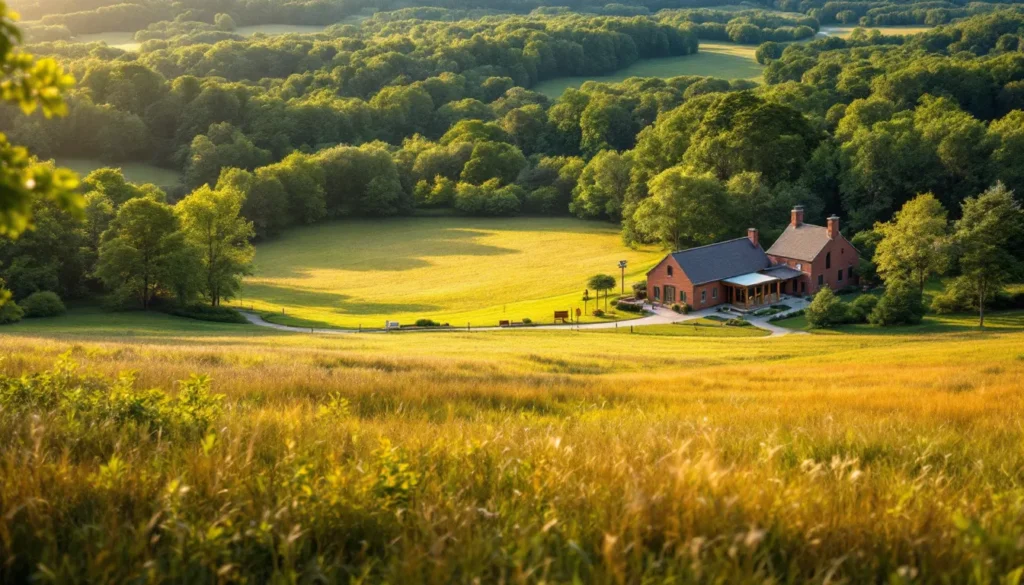
The site itself sprawls across nearly 300 acres of preserved land, maintained by the Pennsylvania Historical and Museum Commission. What makes Bushy Run especially valuable for visitors is its commitment to historical accuracy. The landscape has been carefully reconstructed to reflect the conditions soldiers faced during those two brutal days in August. Unlike some historical sites that exist only in restored buildings, Bushy Run preserves the actual terrain, the dense forests, the creek, and the open meadows that figured prominently in the tactical decisions made during the fight.
The Battle of Bushy Run: Key Facts
The Battle of Bushy Run wasn’t a large-scale engagement by conventional standards, but its strategic impact was enormous. Here are the essential details:
The Force Numbers: Approximately 500 Pennsylvania and Virginia militiamen, led by Colonel Henry Bouquet, faced a coalition of Indigenous nations estimated between 400-600 warriors. The coalition included warriors from multiple nations, primarily Lenape, Shawnee, and others aligned through Pontiac’s movement.
The Opening: On August 5th, Bouquet’s force was ambushed while marching to relieve Fort Pitt. The initial assault was devastating. Indigenous warriors, leveraging superior knowledge of the terrain and employing hit-and-run tactics, pinned down the colonial force near a settlement along Bushy Run creek.
The Turning Point: Rather than panic, Bouquet made a calculated tactical decision on the second day. He executed a false retreat, deliberately appearing to break formation. When Indigenous warriors pressed forward, believing victory was imminent, Bouquet’s troops wheeled around in a coordinated counterattack. This maneuver, unconventional for European-trained soldiers, broke the siege and forced the warriors to withdraw.
The Casualties: The battle resulted in 50 colonial casualties and an estimated 60 Indigenous casualties. While the numbers seem modest by later war standards, the significance lay in the outcome: it prevented what could have been a catastrophic loss of supplies and lives, and it demonstrated that Indigenous forces, even though their tactical advantages, could be defeated through disciplined military action.
Why It Matters: The victory at Bushy Run secured the supply line to Fort Pitt and signaled the turning point in Pontiac’s War. It effectively ended the immediate threat to colonial settlement in the region and allowed British forces to consolidate control over newly acquired French territories. Without this victory, the history of western Pennsylvania and the broader colonial frontier would have unfolded very differently.
The Historical Significance and Impact
Colonial America’s Turning Point
Bushy Run Battlefield represents a critical juncture in the relationship between colonial powers and Indigenous nations. By 1763, the French and Indian War had concluded with a decisive British victory, and the colonists were eager to expand westward. But, the Indigenous nations, facing displacement and the loss of their hunting grounds, organized a coordinated resistance. Pontiac’s War, named after the Ottawa leader who helped unite disparate nations, was their response.
The significance of Bushy Run lies in what it prevented and what it enabled. Had Bouquet’s force been decimated, Fort Pitt would have fallen, and a substantial portion of the frontier could have been lost to Indigenous control. More broadly, a major colonial defeat would have emboldened resistance movements and potentially altered the balance of power in the Ohio Valley. Instead, the victory demonstrated that colonial military forces could adapt and prevail, encouraging further westward expansion.
This expansion came at a profound cost to Indigenous peoples. The battle was part of a larger pattern where military defeats fragmented Indigenous coalitions and accelerated their displacement. The aftermath of Bushy Run saw increased colonial settlement in the region, pressure on remaining tribes to cede lands, and the beginning of the end for Indigenous sovereignty in the eastern woodlands.
Legacy in American History
The legacy of Bushy Run extends far beyond 1763. Historically, the battle represented a symbolic moment: the emergence of colonial military prowess and the beginning of the end for Indigenous resistance in the eastern theater. It became a narrative touchstone in American historical memory, a story of courage, tactical ingenuity, and the triumph of colonialism.
For historians, Bushy Run offers several important lessons. First, it demonstrates the vulnerability of supply lines in frontier warfare and why controlling logistics could be as decisive as controlling the field. Second, it shows how military innovation, Bouquet’s tactical maneuvers, could overcome apparent disadvantages in terrain and numbers. Third, it illustrates the fragility of Indigenous coalitions when facing organized military opposition.
In modern times, Bushy Run Battlefield has become an educational resource. Schools bring students to walk the grounds, teachers use the site to contextualize American history, and the on-site museum provides materials for understanding both the colonial and Indigenous perspectives of the conflict. The site has also become a venue for historical reenactments, where volunteers recreate aspects of the battle to bring history to life. These reenactments, held periodically throughout the year, attract history enthusiasts and families seeking an immersive understanding of colonial-era warfare.
Further, the preservation of Bushy Run reflects a broader shift in how Americans engage with difficult histories. While traditional narratives emphasized the colonial victory, modern interpretations attempt to present a more balanced view, one that acknowledges the Indigenous nations’ justified resistance while still examining the historical forces that shaped the outcome. This nuanced approach has made the site valuable not just for documenting what happened, but for understanding why it happened and what it meant for the peoples involved.
Visiting Bushy Run Battlefield Today
Location and Access Information
Bushy Run Battlefield is located near Harrisburg, Pennsylvania, approximately 28 miles east of Pittsburgh. The exact address is 1253 Old US Route 30, Harrison City, PA 15636. For those planning a visit in 2026, accessibility has improved significantly over recent years.
Getting There:
- By Car: The site is easily accessible via US Route 30. There’s ample free parking near the visitor center and museum. GPS coordinates are 40.4186° N, 79.6511° W, which most navigation apps will recognize.
- Public Transportation: While there’s no direct public transit to the site, it’s within a reasonable distance from Pittsburgh’s regional transportation hub. Many visitors prefer driving, as the site’s size and layout benefit from having personal transportation.
- Accessibility: The visitor center and museum are fully ADA-compliant. Paved pathways connect the parking area to the museum and main interpretive areas. But, some of the battlefield walking trails involve uneven terrain, so visitors with mobility concerns should ask staff about the most accessible routes.
Hours and Admission:
The site is generally open year-round, though hours vary seasonally. In 2026, typical hours are Tuesday through Saturday, 10 AM to 5 PM, and Sunday, noon to 5 PM (closed Mondays and major holidays). Admission is free, though donations are appreciated. Group tours and school visits should be arranged in advance through the site’s administrative office.
What to Expect at the Site
When visitors arrive at Bushy Run Battlefield, they encounter a thoughtfully designed space that balances historical education with natural preservation. The site comprises several distinct areas, each serving a different purpose in understanding the battle.
The Visitor Center: This is where most visitors begin. It contains informational displays, a gift shop, and staff who can provide orientation. The center offers maps of the battlefield and context for understanding the layout.
The Museum: Adjacent to the visitor center, the museum houses artifacts, weapons, period clothing, and interactive exhibits. Display cases contain items recovered from the battlefield, including musket balls, buttons, and tools. The museum doesn’t shy away from discussing both the colonial and Indigenous perspectives, providing a balanced historical narrative.
The Battlefield Trails: Three main interpretive trails guide visitors through different sections of the battlefield:
- The Braddock Trail (2 miles): Follows the path of Colonel Bouquet’s initial march and the ambush sites. This is the most popular trail and offers the clearest sense of tactical geography.
- The Native American Trail (1.5 miles): Explores the battlefield from the perspective of Indigenous warriors, explaining their tactical positions and strategy.
- The Memorial Trail (0.75 miles): A shorter walk connecting memorials and interpretive signs. It’s suitable for visitors with limited time or mobility considerations.
Each trail is marked with numbered stations corresponding to interpretive signs. The signs provide historical context, explain what happened at each location, and help visitors visualize the progression of the battle. Along the trails, visitors encounter open meadows where the colonial force regrouped and densely forested areas where much of the initial ambush took place.
The Cemetery: A small cemetery on the grounds contains graves of both colonial soldiers and, symbolically, represents the site’s role as a place of remembrance for all involved.
Museum and Educational Resources
The Bushy Run Battlefield Museum is among the better-curated small historical museums in Pennsylvania. It provides multiple levels of engagement for visitors.
For Casual Visitors: The main museum floor offers an accessible overview of the battle, presented chronologically. Display panels use clear language and period illustrations to explain the conflict’s lead-up, the battle itself, and its aftermath. Interactive elements, including a large relief map of the battlefield, help visitors understand the tactical geography.
For Deep Historians: The museum’s research library and archival materials are available by appointment. This includes primary documents, letters, military records, and archaeological findings. Researchers and students serious about understanding Bushy Run’s nuances will find valuable resources here.
Educational Programs: The site offers school programs tailored to different grade levels, from elementary school overviews to high school detailed tactical analysis. Teachers report that visiting brings colonial-era history into sharper focus for students. The site also hosts workshops on topics like 18th-century weapons, period medical practices, and Indigenous history.
Publications and Guides: The museum gift shop carries books on Bushy Run, broader colonial history, and the lives of key figures like Colonel Bouquet. Many are written by historians affiliated with the site and provide deeper context than what can be absorbed during a single visit.
Visitors interested in gaining more specific information about regional history can explore gaming communities discussing historical media and documentaries to discover how historical events are portrayed across different formats and formats.
Virtual and Gaming Experiences Related to Bushy Run
Historical Games and Simulations
While Bushy Run Battlefield isn’t the focus of major commercial video games, it does appear in several historical strategy games and educational simulations. These digital experiences offer alternative ways to explore the battle from home, making the history accessible to those unable to visit Pennsylvania in person.
Strategy and Tactics Games: Some turn-based strategy games set during the colonial period include scenarios modeled on Bushy Run or similar colonial-era conflicts. Games in the Civilization franchise occasionally reference the battle in their historical context modules. Also, historical wargaming simulators used by military history enthusiasts sometimes feature detailed recreations of Bushy Run’s tactical challenges, allowing players to command either Bouquet’s forces or the Indigenous coalition.
Educational Simulations: University history departments and some high schools use custom-built digital simulations where students can command troops during the battle, make tactical decisions, and observe outcomes. These simulations, while not commercial products, are valuable for understanding the constraints and choices Bouquet and Indigenous leaders faced.
Augmented Reality Experiences: Some visitors to the actual Bushy Run site use mobile apps that layer historical information onto their phone cameras, showing what structures or positions existed during 1763. These tools are still being developed but represent the future of on-site historical interpretation.
Documentary and Media Coverage
Documentary content provides another avenue for exploring Bushy Run’s significance. Several historical documentary series have featured segments on the battle, placing it within the broader context of Pontiac’s War and colonial expansion.
Documentary Series: PBS has produced colonial-era documentaries that include discussions of Bushy Run. These programs, often available through streaming services, provide visual reenactments and expert commentary. Major historical networks frequently air content related to colonial conflicts, and Bushy Run appears in compilations covering 18th-century warfare.
Podcast and Audio Content: History podcasts have increasingly devoted episodes to Bushy Run and Pontiac’s War. Popular shows focusing on military history, Native American history, and colonial America have featured detailed discussions with historians specializing in the period. These podcasts allow listeners to absorb complex historical narratives while commuting or multitasking.
YouTube and Online Resources: Independent historians and content creators have produced videos analyzing Bushy Run’s tactics, comparing it to other colonial conflicts, and discussing its cultural impact. Gaming and history channels sometimes overlap, with creators analyzing how historical events could or should be adapted into gaming scenarios.
For those seeking comprehensive reviews and in-depth analysis of how historical events are covered across media, outlets like Game Rant’s historical features examine how games and entertainment interpret real historical moments, offering perspectives on accuracy and narrative choices.
Planning Your Battlefield Visit: Tips and Best Practices
Best Times to Visit
Timing your Bushy Run visit affects both the experience and practicality. Here’s what visitors should consider for a 2026 visit:
Seasonal Considerations:
- Spring (April-May): The site is at its most scenic. Wildflowers bloom, the weather is mild (50-70°F), and trails are accessible. This is ideal for walking the battlefield trails without overheating or struggling through mud. Expect moderate crowds.
- Summer (June-August): Warm but can be humid. Early morning visits are recommended to avoid heat and crowds. Reenactments sometimes occur in summer, which adds atmosphere but brings larger crowds.
- Fall (September-November): Similar to spring in terms of comfort. Foliage is spectacular in October. Crowds thin after Labor Day. This is arguably the best time for serious battlefield walking.
- Winter (December-February): Cold and potentially snowy. Some trails become muddy or hazardous. The site is beautiful in snow but less practical for extended exploration. Crowds are minimal.
Event Scheduling:
The site hosts reenactments and special events, typically in summer and early fall. These events recreate battle scenes, period camps, and military demonstrations. While engaging, they significantly increase crowds and parking demands. If you prefer a quieter experience, avoid event weekends.
Time of Day:
Visit in the morning (around 10 AM when the site opens) to maximize daylight for trail walking and avoid afternoon crowds. Allow at least 3-4 hours for a thorough visit combining museum time and moderate trail exploration.
What to Bring and Prepare
Proper preparation ensures a comfortable and enriching visit:
Essentials:
- Comfortable Walking Shoes: The trails involve uneven terrain, roots, and potential mud. Hiking boots or sturdy sneakers are essential. Avoid sandals.
- Water and Snacks: Bring at least 2 liters of water per person, especially in warm months. The trails have no water stations. Light snacks sustain energy during exploration.
- Weather-Appropriate Clothing: Check the forecast. Layer your clothing so you can adjust as you warm up. In colder months, bring a jacket: in summer, sun protection.
- Map and Interpretive Guide: The site provides free maps, but buying a detailed guide from the gift shop (usually $5-10) enhances understanding of what you’re seeing.
- Camera or Phone: The site is photogenic. Historic markers, landscape features, and the museum exhibits are worth documenting.
Optional But Recommended:
- Binoculars: The open meadow sections benefit from distant viewing. Binoculars help visitors see the landscape as soldiers might have perceived it during the battle.
- Notebook and Pen: Serious history buffs enjoy jotting notes at interpretive stations or the museum.
- Portable Phone Charger: Trail walking combined with using a GPS app or historical app will drain your battery.
Preparation:
- Read Ahead: Spending 30 minutes reading about the battle’s basic facts before visiting dramatically increases comprehension. The site’s website offers introductory materials.
- Plan Your Route: Decide which trails you’ll walk based on your fitness level and available time. The 2-mile Braddock Trail is the most informative but requires more stamina than the short Memorial Trail.
- Ask Staff for Advice: When you arrive, ask museum staff for personalized recommendations. If you’re interested in Indigenous perspectives, they’ll guide you. If tactics fascinate you, they’ll explain the terrain accordingly.
Nearby Attractions and Extended Itineraries
Bushy Run doesn’t exist in isolation. The surrounding region offers complementary historical sites and attractions, allowing visitors to extend their trip into a broader historical journey.
Nearby Historical Sites:
- Fort Pitt Museum (Pittsburgh, 25 miles west): The fort that Bouquet was attempting to relieve. The museum explores the fort’s construction, the soldiers who garrisoned it, and its role during the French and Indian War and subsequent conflicts.
- Fort Necessity National Battlefield (Fayette, 35 miles southwest): An earlier French and Indian War site where George Washington experienced his first military defeat in 1754. Understanding Fort Necessity contextualizes Bushy Run within the broader trajectory of colonial conflict.
- Eckley Miners’ Village (Luzerne County, 80 miles northeast): While not directly related to Bushy Run, this preserved 19th-century settlement offers insights into frontier life and westward expansion.
Regional Museums:
Harrisburg, the state capital (25 miles west), houses the State Museum of Pennsylvania, which includes colonial-era exhibits and broader Pennsylvania history. The Pennsylvania Heritage Society also maintains resources on regional history.
Extended Itinerary (2-3 Days):
- Day 1: Bushy Run Battlefield (4-5 hours). Explore the museum, walk at least one main trail.
- Day 2: Fort Pitt Museum and Pittsburgh’s Strip District (historic market area reflecting frontier trade patterns).
- Day 3: Fort Necessity National Battlefield and nearby Laurel Highlands for scenery and regional exploration.
For those interested in comprehensive tactical analysis of historical conflicts, including how military decisions were made and understood, DSOGaming’s historical analysis pieces occasionally examine strategic decision-making in games modeled on real historical scenarios, offering frameworks for understanding military choices.
Conclusion
Bushy Run Battlefield stands as more than a historical marker, it’s a place where decisions made across two days in August 1763 rippled through centuries of American history. For visitors in 2026, the site offers a rare opportunity to walk the actual terrain where colonial and Indigenous forces clashed, to handle artifacts in the museum, and to engage with the complex story of colonial expansion and Indigenous resistance.
Whether you’re a history enthusiast, an educator planning a school trip, a casual tourist exploring Pennsylvania’s heritage, or someone interested in how historical events shaped the modern world, Bushy Run provides meaningful context and immersive experience. The site’s commitment to balanced historical interpretation, acknowledging both the colonial tactical victory and the broader tragic consequences for Indigenous peoples, makes it a valuable destination for anyone seeking nuanced understanding of this critical period.
Planning a visit requires minimal logistical effort but yields substantial rewards. The site is accessible, well-maintained, and enriched by knowledgeable staff. Pair it with nearby attractions like Fort Pitt, and you’ve constructed a comprehensive colonial-era historical journey. As you walk those trails, you’ll carry the weight of understanding what happened there, and why it mattered.


