
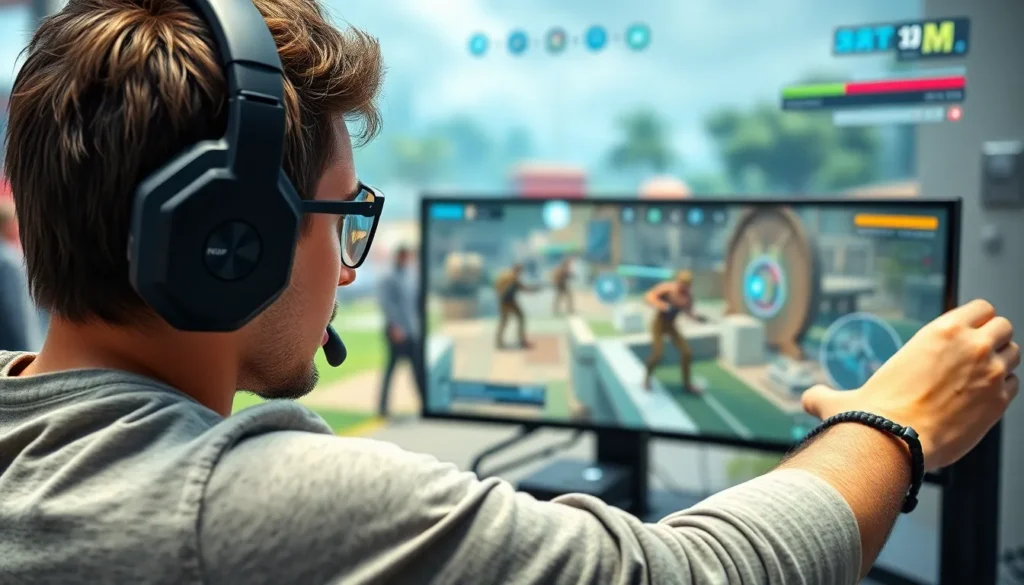
In the heat of battle, every second counts. A well-optimized HUD can mean the difference between victory and an embarrassing respawn. Imagine dodging enemy fire while your screen is cluttered with unnecessary info—it’s like trying to navigate a minefield with a blindfold on. Not ideal, right?
Overview of Battlefield HUD Settings
A well-optimized Heads-Up Display (HUD) is crucial for effective gameplay in battlefield scenarios. Clarity on the screen significantly enhances player performance by enabling quicker decision-making and threat response. Customizing HUD settings helps to eliminate unnecessary on-screen clutter that can distract players during intense moments.
Elements such as health indicators and minimaps require strategic positioning within the HUD. The right placement allows players to monitor vital information without sacrificing screen space. Players can adjust transparency levels for various HUD elements to ensure essential information remains visible while avoiding overwhelming visuals.
Numerous games provide customizable options to tailor the HUD to individual preferences. Adjusting icon sizes impacts how easily players identify allies and enemies on the battlefield. In addition, users can change color schemes to enhance visibility and ensure clarity in different environments.
Listening to community feedback plays an important role in refining these settings. Developers often release updates to address concerns about HUD functionality and layout. Engaging with the player community leads to improved design choices that resonate with gameplay needs.
Incorporating these adjustments into the settings can vastly improve the overall gaming experience. Players who experiment with various configurations uncover which settings best fit their playstyle. Understanding the balance between information density and screen clarity is key to mastering any battlefield scenario.
Key Features of Battlefield HUD Settings
Players benefit significantly from an optimized Heads-Up Display (HUD). Customization options enhance gameplay by allowing adjustments that best fit individual styles.
Customization Options
Players can modify numerous elements to tailor the HUD. Icon sizes can be increased or decreased to improve visibility. Transparency levels of indicators provide options to balance information density and clarity. Health bars’ positions can be customized, ensuring that vital health information remains accessible. Additionally, players alter the minimap’s location, enhancing tactical awareness without cluttering the screen. These flexible settings empower each player to create a unique experience that aligns with their preferences.
Accessibility Features
Inclusivity shines through the HUD’s accessibility features. Colorblind modes adapt color palettes for players with color vision deficiencies, facilitating easy identification of critical elements. Text size adjustments ensure readability for players who may have visual impairments. Furthermore, voice commands and navigation aids enhance control for those who require additional support. These thoughtful design choices ensure that every player can engage fully with the game, promoting an enjoyable experience for all.
Importance of Battlefield HUD Settings
A well-optimized Heads-Up Display (HUD) significantly enhances the gaming experience, particularly in high-pressure battlefield situations. Streamlined, clear information allows players to focus on the action without unnecessary distractions.
Enhancing Gameplay Experience
Customizable HUD settings lead to a more enjoyable gameplay experience. Players can adjust elements like icon sizes and transparency levels to match their preferences. Fewer distractions on the screen often result in improved performance. A tailored HUD allows quick recognition of critical information, such as health status and ammunition levels. Personalization makes the interface intuitive, helping players respond effectively to changing scenarios.
Improving Situational Awareness
Enhanced situational awareness stems from strategic HUD placements. Positioning health indicators and minimaps effectively allows for easy monitoring of surroundings. Players benefit from quickly accessing vital data, aiding in timely decision-making. Adjustments to transparency and color settings contribute to better visual clarity. An organized HUD reduces clutter while maintaining essential information. Ultimately, these settings empower players to react swiftly to threats, fostering a sense of control during intense gameplay.
Popular Battlefield HUD Settings Among Players
Players often prefer certain HUD settings to enhance their gaming experience. Many choose larger icon sizes for better visibility during fast-paced action. Adjusting transparency levels allows essential elements to remain apparent without overwhelming the screen.
Health indicators rank among the most crucial HUD features; positioning them at the top corners can quickly convey vital information. Minimaps frequently appear as a necessity, as they help players navigate the battlefield effectively.
Another popular setting involves enabling colorblind modes; these options enhance accessibility for players with visual impairments. Text size adjustments also play a significant role in ensuring information is easily readable, promoting inclusivity within the gaming community.
Customizable placements for ammo counts and reload timers contribute to strategic gameplay. Players find it helpful to place these indicators in locations that minimize distractions yet ensure readiness during combat.
Certain players prefer clutter-free interfaces that only display critical data, allowing focus on the action rather than unnecessary details. Constantly tweaking settings based on gameplay experiences leads to better performance over time.
Community feedback shapes developers’ decisions when refining HUD layouts. Engaging with players through forums and updates enables developers to understand which configurations work best. Many appreciate features that facilitate quick adjustments without lengthy navigation through menus.
Keeping teamwork in mind, players often optimize their HUD to identify allies swiftly. This leads to improved coordination during tactical encounters, crucial for success in multiplayer modes. Prioritizing these popular settings can significantly enhance both individual and team performance in the gameplay atmosphere.
Optimizing HUD settings is essential for enhancing gameplay in Battlefield. By customizing the display to reduce clutter and improve clarity players can significantly boost their performance in high-pressure situations. The ability to adjust icon sizes transparency levels and the positioning of key elements allows for a tailored experience that meets individual needs.
Engaging with the community ensures that developers stay attuned to player preferences leading to continual improvements in HUD design. A well-structured HUD not only promotes better situational awareness but also fosters teamwork in multiplayer modes. Ultimately a streamlined and personalized HUD can transform the gaming experience making every battle more immersive and enjoyable.


