
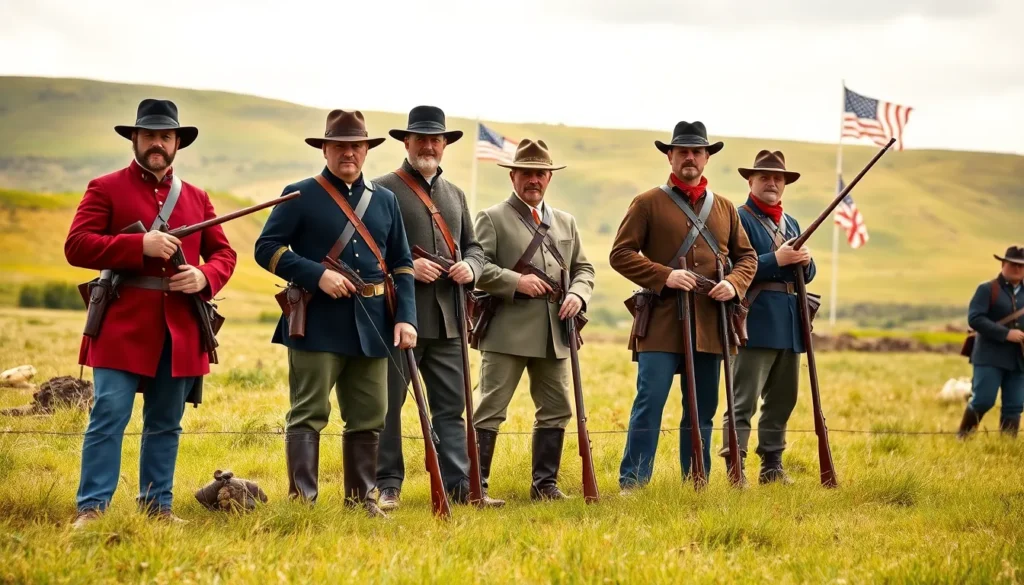
When it comes to battlefield events, the stakes are high and the excitement is palpable. Picture this: warriors clash, strategies unfold, and the air crackles with tension. These events aren’t just about victory; they’re epic tales of bravery and cunning that captivate audiences and participants alike.
Overview of Battlefield Events
Battlefield events capture the essence of historical and military significance. They showcase dramatic clashes where strategies unfold amidst chaos. These events feature skillful warriors executing intricate maneuvers, testing their limits and courage. Each encounter contributes to a greater narrative, weaving a tapestry of human experience and resilience.
Organizations often host various battlefield events, including reenactments, live demonstrations, and competitions. Reenactments allow participants and spectators to immerse themselves in specific historical moments. Live demonstrations focus on showcasing tactics and weaponry used in historical battles. Competitions create arenas for warrior skills, providing participants opportunities for glory and accolades.
Learning about battlefield events offers insight into military history and fosters appreciation for the bravery displayed. Historical significance confirms that these events are not just about victory but also the stories shared through time. Observers can witness firsthand the struggles and triumphs that shaped nations and cultures.
Weapons, armor, and tactics involved in these events vary widely depending on the time period and culture. Traditional weaponry such as swords, shields, and bows often dominate medieval battles, while modern events may feature firearms and advanced technologies. Each type of weapon reflects the evolution of combat over centuries.
Participating in or witnessing these events evokes emotions, drawing people into the past. Through stories of camaraderie, sacrifice, and strategic brilliance, battlefield events hold deep meaning. Engaging with these rich narratives prompts reflection on the sacrifices made in the name of freedom and honor.
Historical Significance

Battlefield events hold profound historical importance, showcasing pivotal moments that influenced nations and cultures. These events not only narrate stories of valor but also reveal the complexities of human conflict.
Key Battles and Their Impact
Crucial battles shape the course of history. The Battle of Gettysburg, for instance, marked a turning point in the American Civil War, establishing the Union’s strength. Another significant clash, the Battle of Waterloo, ended Napoleon’s reign and altered Europe’s political landscape. These battles demonstrate that the outcomes impact not just the immediate participants, but also future generations, guiding military strategies and national identities. The analysis of such events underscores the connection between battlefield strategies and their long-term consequences for society.
Lessons Learned from the Past
Valuable lessons emerge from historical battlefield events. Understanding the strategies employed in pivotal confrontations enhances contemporary military tactics. For instance, the tactics of World War II highlighted the significance of logistics and intelligence in warfare. Effective troop movements and communication played a critical role in Allied successes. Each battle teaches modern military planners about adaptability and decision-making under pressure. Moreover, these events urge reflection on the cost of conflict, emphasizing the importance of diplomacy to prevent future disputes.
Types of Battlefield Events
Battlefield events encompass various types, each distinct in its characteristics and historical significance. Exploring these categories reveals the breadth of experiences available for enthusiasts and participants alike.
Major Ground Battles
Major ground battles feature large-scale confrontations between armies. These events often draw significant attention due to their historical implications and tactical complexity. The Battle of Gettysburg, for instance, showcased the intense struggles of the Civil War while highlighting innovative battlefield tactics. During these encounters, strategies evolve in real-time, as commanders adapt to changing conditions. Participants in reenactments typically utilize authentic weaponry and uniforms, allowing for an immersive experience that educates audiences about military history.
Naval Engagements
Naval engagements represent another critical aspect of battlefield events. These maritime confrontations often determine control over key waterways and trade routes. Notable examples include the Battle of Trafalgar, where British forces decisively defeated the French and Spanish fleets, influencing naval power for generations. In live demonstrations, participants can appreciate the strategic maneuvers and technology that defined warfare at sea. Engaging in such events fosters a deeper understanding of naval history and its enduring relevance to global conflicts.
Evolution of Battlefield Strategy
The evolution of battlefield strategy reflects significant changes influenced by technological advancements and shifting tactics over time.
Technological Advancements
Weapons development transformed warfare dynamics. The introduction of gunpowder shifted focus from melee combat to ranged strategies, drastically altering conflicts. Armored vehicles and aircraft provided new tactical options, allowing forces mobility and the ability to strike from above. Drones have also emerged as significant assets, enabling surveillance and precision strikes while minimizing risks to personnel. Communication technology has synchronized operations, improving coordination and efficiency on the battlefield. These innovations reshaped traditional approaches, introducing strategies that leverage new capabilities and ensure adaptability in rapidly changing environments.
Changing Tactics Over Time
Tactics have evolved alongside technological advancements. Historical battles exemplify shifts in strategies responding to battlefield conditions. Generals analyzed terrain and troop movements, adjusting plans accordingly. Flanking maneuvers became central to outmaneuvering opponents, while combined arms tactics integrated infantry, armor, and air support for cohesive operations. As wars progressed, guerrilla strategies and asymmetric warfare emerged, emphasizing mobility and stealth over rigid formations. Modern conflicts focus on hybrid strategies, blending conventional and unconventional methods to enhance effectiveness. Adapting to evolving threats remains crucial, as military leaders continuously refine tactics to address complex challenges in diverse environments.
Cultural Depictions of Battlefield Events
Cultural representations of battlefield events manifest across various media, including literature, film, and art. Historical novels often portray the emotional and physical turmoil faced by soldiers, emphasizing both personal and collective struggles. Filmmakers create epic narratives that showcase grand battles, focusing on heroism, sacrifice, and the horrors of war.
Art holds significant importance in depicting battlefield events. Painters and sculptors capture the intensity of conflicts, immortalizing key moments in visual form. Notable artworks, such as Picasso’s “Guernica,” convey the chaos and tragedy of war, reflecting societal impacts and provoking feelings of empathy.
Theatrical productions also explore the themes surrounding battle. Dramatic interpretations allow audiences to engage emotionally with historical figures, enhancing understanding of their motivations and challenges. Playwrights highlight moral dilemmas and the psychological effects of war, encouraging reflections on human nature and conflict.
Additionally, video games have emerged as a powerful medium for engaging with battlefield events. Many titles offer immersive experiences, allowing players to participate in historical battles. Through realistic simulations, players gain insights into strategies and tactics while appreciating the complexity of warfare.
Various cultures celebrate significant military events through festivals and reenactments. Events like the commemoration of the Battle of Gettysburg attract enthusiasts who honor history and learn from it. Reenactors, dressed in authentic uniforms, recreate historical moments, fostering a deeper appreciation for sacrifices made during conflicts.
Multimedia projects also contribute to understanding battlefield events, blending narratives and visual elements. Documentaries often present factual accounts, allowing viewers to analyze the nuances of historical conflicts. This format encourages critical thinking and facilitates discussions about the lasting ramifications of warfare on society.
Different cultural depictions, thus, deepen understanding of battlefield events. By highlighting individual stories and broader implications, these representations foster appreciation for the complexities of war and its profound effects on humanity.
Battlefield events encapsulate the essence of human resilience and strategy. They provide a captivating glimpse into the past while fostering a deeper appreciation for the sacrifices made throughout history. Through reenactments and competitions, participants and audiences alike can connect with the narratives that shaped nations and cultures.
These events not only entertain but also educate, allowing people to explore the complexities of warfare and the evolution of tactics. As technology continues to advance, the dynamics of battlefield events will likely transform, challenging future generations to adapt and learn. Ultimately, they serve as a powerful reminder of the importance of understanding history to navigate the complexities of modern conflicts.


