
Table of Contents
ToggleImagine checking into a hotel room where the view isn’t a beach or city skyline, it’s a perfectly optimized gaming setup with a 240Hz monitor, mechanical keyboard, and fiber internet so fast your ping never stutters. This is the reality of Battlefield bed and breakfast properties popping up worldwide in 2026. Unlike traditional gaming hotels that slap a console in a corner and call it a day, these specialized gaming lodges are designed by gamers, for gamers. Whether you’re a competitive esports player grinding ranked matches, a casual gamer looking for a gaming-centric vacation, or someone traveling to a tournament, the Battlefield bed and breakfast inn concept offers something no standard hotel can: an environment where your passion for gaming isn’t just tolerated, it’s celebrated. We’ll break down everything you need to know about these unique accommodations, from what sets them apart to whether one’s actually worth booking for your next trip.
Key Takeaways
- Battlefield bed and breakfast properties are specialized gaming lodges designed by gamers for gamers, featuring high-end hardware (RTX 4070+), dedicated fiber internet with sub-5ms ping, and ergonomic gaming setups that traditional hotels can’t match.
- These accommodations differ from standard gaming hotels by prioritizing performance-grade specifications, redundant ISP infrastructure, professional-quality peripherals, and staff who understand competitive gaming requirements rather than treating gaming as an afterthought.
- Pricing ranges from $70-300+ per night depending on tier and location, with budget options in secondary esports cities, mid-tier rooms in major hubs, and premium suites offering RTX 4090 rigs and tournament-grade equipment.
- Battlefield bed and breakfast properties are clustered in major esports hubs like Los Angeles, Chicago, Austin, Berlin, Seoul, and Shanghai, with tournament season demand requiring bookings 8-12 weeks in advance.
- Player reviews confirm consistent benefits—improved latency, reliable hardware, knowledgeable staff, and community spaces—though some cite inconsistent quality across locations, aggressive pricing during tournaments, and noise issues in shared spaces.
- Ideal guests include esports competitors, streaming content creators, gaming teams on bootcamp, and anyone traveling for gaming-focused events; casual vacationers and budget travelers may find traditional hotels or Airbnbs more cost-effective.
What Is Battlefield Bed and Breakfast?
The Origins of Gaming-Themed Hospitality
Gaming-themed accommodations aren’t entirely new, but the Battlefield bed and breakfast concept represents a significant evolution. For years, gaming hotels existed in a weird middle ground, they’d offer gaming amenities as novelties rather than core features. The Battlefield B&B movement flipped this entirely. It emerged from a simple observation: esports tournaments, gaming conventions, and competitive gaming communities needed proper lodging that treated high-performance gaming as a priority, not an afterthought.
The first dedicated properties started appearing in major gaming hubs around 2023-2024, with explosive growth in 2025-2026. Properties are typically small to mid-sized (10-30 rooms), owner-operated by actual gamers who understand the community’s needs. They’re less about luxury and more about functionality, though amenities have steadily improved as the market matures.
How Battlefield B&B Differs From Traditional Gaming Hotels
The core difference is deliberate specialization. A standard hotel with a “gaming room” might have outdated consoles, a laggy Wi-Fi connection, and furniture designed by someone who’s never sat at a desk for eight hours. Battlefield bed and breakfast inn properties start with the gaming experience and build everything around it.
Here’s what sets them apart:
- Network Infrastructure: Dedicated fiber or gigabit connections with redundant ISPs. Zero reliance on shared residential bandwidth. Gaming at these properties means consistent sub-5ms ping regardless of how many other guests are online.
- Hardware Quality: You’re getting current-generation equipment. Think RTX 40-series GPUs, DDR5 memory, high-refresh 1440p or 4K monitors. Not the budget stuff, the gear competitive players actually use.
- Design Around Gameplay: Ergonomic desks sized for full peripherals, cable management that doesn’t look like spaghetti, and actual desk space (not a tiny nightstand with a controller).
- Community-First Spaces: Common areas designed for LAN parties, casual tournaments, or just hanging with other gamers. Many have lounge areas with comfortable seating and multiple screens for spectating.
- Staff Who Get It: The owners and staff actually play games. They know what a frame time spike means, why latency matters, and can troubleshoot issues without you explaining basics.
You’re paying for specialization, not generic hospitality with gaming bolted on.
Core Features and Amenities
Gaming Setups and Hardware
The centerpiece of any Battlefield bed and breakfast stay is the gaming rig. Room setups vary by property and tier, but here’s what you’ll typically encounter:
High-End Gaming PCs: Most properties offer dual-setup options. Primary rigs are usually custom-built or high-spec prebuilts (think NZXT, Corsair, or Alienware Aurora) with:
- RTX 4070/4080 or equivalent GPU (some premium rooms offer RTX 4090)
- Intel i7-13700K or AMD Ryzen 7 7700X equivalent
- 32GB DDR5 RAM minimum
- NVMe SSD storage with 1TB+ capacity
Secondary setups in mid-tier rooms might drop to RTX 4070 Super territory, still more than capable for competitive FPS gaming at high frame rates.
Monitor Configurations: 27-inch 1440p 240Hz is the baseline across most properties. Premium rooms upgrade to 27-inch 4K 144Hz or dual-monitor setups. Competitive players will appreciate IPS panels with proven response times (Dell S2721DGF, LG 27GP850, or similar).
Peripherals: Mechanical keyboards (usually Corsair, SteelSeries, or Razer), gaming mice with adjustable DPI (often with mousepad), headsets with noise cancellation, and controller options for console gaming.
Console Support: Most rooms include PS5 and Xbox Series X/S, with dedicated TV setups optimized for low-latency gaming (Game Mode enabled, direct HDMI input, no processing lag).
Network speeds? The Loadout consistently reviews competitive-grade setups, and Battlefield B&B properties typically ensure 300+ Mbps down/up minimum, with many offering 1Gbps synchronous fiber.
Themed Accommodations and Design
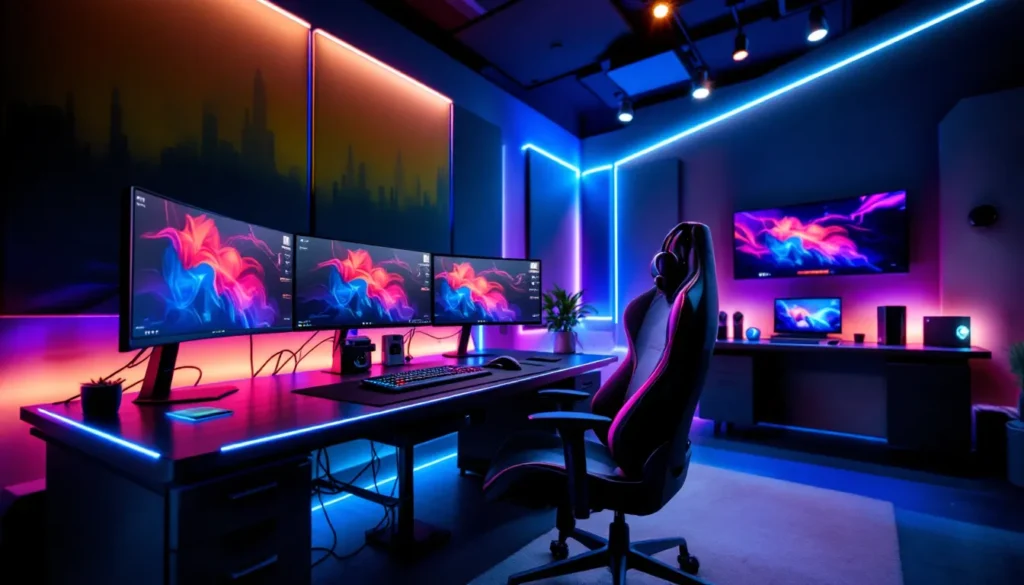
Unlike hotel rooms that happen to have a desk, Battlefield bed and breakfast inn properties treat the entire room as a gaming environment. You’ll find:
- Gaming Desk as Centerpiece: The work surface isn’t an afterthought. You’re getting 60-72 inch desks with proper cable management, monitor arms, and acoustic paneling to reduce echo if you’re streaming or on competitive team comms.
- Lighting Setup: RGB accent lighting (usually customizable), bias lighting behind monitors to reduce eye strain, and separate brightness controls for gaming vs. sleeping.
- Seating: Herman Miller or steelcase-adjacent ergonomic chairs, not gaming chairs with cheap foam, but actual adjustable, lumbar-support equipment. You’ll be sitting for hours: they get this.
- Sound Isolation: Acoustic panels on walls, soundproofing between rooms (so your teammate’s mechanical keyboard doesn’t annoy neighbors), and quality speaker placement.
- Aesthetic Theming: Some properties embrace “Battlefield” branding directly with decor, color schemes, and custom artwork. Others keep it minimal and functional. Depends on the location.
Social and Competitive Spaces
What separates Battlefield bed and breakfast from renting a gaming PC and an Airbnb is the community component. Shared spaces include:
- LAN Party Lounge: Tables configured for 4-8 person hookups, tournament brackets on displays, and spectator seating.
- Casual Gaming Area: Console setups, couch co-op games, and relaxation zones for non-competitive play.
- Streaming Setup Rooms: Some premium properties offer dedicated rooms with broadcast-quality cameras, green screens, and streaming software licenses. Perfect if you’re a content creator traveling to an event.
- Meeting Spaces: For teams, clans, or esports organizations doing bootcamp-style training.
Many properties organize informal tournaments, game nights, or meetups. This is where you’ll find tournament teams doing final practice, content creators collaborating, and random guests forming impromptu squads.
Location Guide: Finding Battlefield B&B Properties Worldwide
Popular Destinations and Regional Options
Battlefield bed and breakfast properties are clustering in specific hubs, largely tied to esports infrastructure and gaming communities.
North America:
- Los Angeles, California: Largest concentration. Properties cater to streamers, tournament attendees, and esports orgs. Expect higher pricing ($120-200/night premium tiers).
- Chicago, Illinois: Midwestern hub with solid esports presence. More affordable than coasts ($80-140/night).
- Austin, Texas: Growing scene with friendly pricing ($90-150/night) and strong gamer community.
- Toronto, Canada: Canadian esports hub with a few Battlefield bed and breakfast inn options.
Europe:
- London, UK: Established gaming infrastructure. Premium pricing mirrors London’s hotel market.
- Berlin, Germany: Emerging hub with several budget-friendly options ($70-120/night).
- Stockholm, Sweden: Nordic esports stronghold with high-quality properties but high costs (£100+).
Asia-Pacific:
- Seoul, South Korea: Ground zero for esports. Competition is intense, but quality is exceptional. These feel less like B&Bs and more like esports training facilities.
- Shanghai, China: Rapidly expanding with modern facilities.
- Singapore: Premium tier with excellent infrastructure.
What to Expect at Different Locations
Properties vary significantly by region. Battlefield B&B in Los Angeles might emphasize streaming amenities and influencer appeal. Berlin locations often prioritize affordability and community. Seoul facilities are tournament-grade with tournament-tier equipment.
Before booking, check:
- Network Uptime SLA: Do they guarantee 99.9% uptime? What’s the backup plan if fiber goes down?
- Hardware Refresh Cycle: When was equipment last upgraded? Gaming hardware becomes dated quickly.
- Peak Season Availability: Tournament seasons (IEM, LCS playoffs, Valorant Champs buildup) fill rooms fast. Book 4-6 weeks ahead during major events.
- Local Esports Calendar: A property near a major tournament venue during event season is worth planning around.
- Reviews Specific to Your Game: A property optimized for competitive Valorant might have different network configs than one catering to battle royale streamers. IGN’s gaming news and guides often cover esports event schedules and tournament hosting cities.
Check player reviews, not just general hotel ratings, but specific feedback from gamers about latency, hardware performance, and community vibe.
Booking and Pricing Insights for Gamers
Cost Breakdown and Value Proposition
Battlefield bed and breakfast pricing depends heavily on location, tier, and season.
Budget Tier ($70-110/night):
- RTX 4070 Super, 1440p 240Hz, solid internet
- Smaller rooms, shared common areas
- Usually in secondary esports cities or off-peak pricing
- Good for casual gamers, content consumption, light gaming
Mid Tier ($110-180/night):
- RTX 4080, 1440p 240Hz or 4K 144Hz, premium peripherals
- Larger desks, better ergonomic seating
- Dedicated streaming room access
- Standard choice for most travelers
Premium Tier ($180-300+/night):
- RTX 4090, dual monitors or high-end single setup
- Suite-style layouts, soundproofing
- Priority network bandwidth
- Tournament-grade equipment
- Often includes food/beverage credits
Tournament pricing during major events can spike 30-50% above standard rates. A mid-tier room that’s normally $140 might be $200+ during Valorant Champions week in its host city.
Value Proposition: Compare to alternatives.
- Standard Gaming Hotel ($120-150/night): Dated hardware, shared Wi-Fi, minimal setup. You’re getting name recognition and amenities you don’t need.
- Airbnb Gaming Setup ($80-200/night): Hit or miss. You’re trusting someone’s personal PC, their internet quality, and peripherals that may be worn out. Common issue: owners claim “high-end” but deliver outdated specs.
- Dedicated Gaming PC Rental + Hotel ($150-250/night combined): Fragmented experience. Different locations, less community.
Battlefield bed and breakfast properties offer integrated experience, guaranteed hardware quality, vetted internet, and social infrastructure, in one package.
Booking Tips and Best Times to Reserve
Early Bird Advantage: Book 6-8 weeks ahead for standard stays. For tournament cities during event seasons, aim for 8-12 weeks out.
Off-Peak Savings: Avoid tournament seasons, major LAN events, and convention weekends. Mid-week stays (Tuesday-Thursday) are typically 15-25% cheaper than weekends.
Loyalty and Packages: Some chains offer multi-night discounts. 3+ night stays often get 10-15% off nightly rates. Tournament organizers sometimes negotiate group rates for teams, worth asking if you’re traveling with a squad.
Verification: Confirm hardware specs and network details in writing before booking. A property that claims “high-speed internet” without specifying Mbps or latency guarantees isn’t worth risking.
Cancellation Policies: Standard gaming hotels often have stricter policies than traditional hospitality. Tournament cancellations happen. Confirm what happens if your event gets postponed.
Specialty Amenities: If you’re streaming, confirm green screen room availability. If you need console-specific setups, verify they have current-gen hardware, not PS4-era equipment. Details matter for your actual use case.
Most properties use direct booking through their websites rather than standard hotel aggregators. This often means better communication with staff who understand your gaming needs.
Guest Experience: What Gamers Are Saying
Reviews and Community Feedback
Real player feedback reveals what marketing won’t. Aggregated across gaming forums, Reddit (r/esports, game-specific subreddits), and Trustpilot:
Consistent Praise:
- Low latency actually delivers. Players report 3-8ms ping improvements over home internet.
- Hardware is current and functional. No dead keys on keyboards, working mice without sensor lag, and monitors actually calibrated.
- Staff competence is genuinely rare in hospitality. When your monitor goes dark, the fix isn’t “have you tried turning it off,” it’s “driver issue on that GPU, I’ll rollback it now.”
- Community energy. Players mention unexpected friend-group formations, impromptu tournaments, and the social aspect as major highlights.
Legitimate Criticisms:
- Inconsistent Quality: Chain-operated properties vary wildly by location. Same brand, different city, sometimes vastly different experience.
- Pricing Creep: Tournament season pricing is aggressive. Rooms that should be $120 hit $220 during major events in the area.
- Hidden Fees: Some properties charge extra for streaming room access, tournament participation, or extended LAN sessions. Read fine print carefully.
- Hardware Customization Limitations: You get the rig they provide. Bring your own mouse and keyboard (many do), but you can’t upgrade the GPU or swap monitors.
- Noise and Accessibility: Open common areas mean noise bleeds into rooms. Rooms near LAN spaces report more ambient sound. Not ideal if you value quiet.
- Regional Service Gaps: Outside major esports cities, Battlefield bed and breakfast properties are sparse or nonexistent. Selection is geographically limited.
Common Highlights and Potential Drawbacks
Highlights That Keep Players Coming Back:
- Consistent Competitive Environment: You’re not disadvantaged by inferior hardware. You’re testing skill, not fighting against a laggy mouse.
- Social Network Effects: Repeat guests form communities. You might stay with the same crew multiple times for different tournaments.
- Stress-Free Setup: No troubleshooting your own rig on a tournament morning. Everything’s tested and ready.
- Content Creator Synergy: Streamers meet other streamers. Business partnerships, collaborations, and community-building happen naturally.
Potential Drawbacks:
- Not a Substitute for Home Setup: Many competitive players report that traveling to a new setup, even a good one, introduces a brief adjustment period. Muscle memory doesn’t instantly transfer.
- Dependency on Property Quality: If a property cuts corners on network maintenance or lets hardware degrade, you’re stuck. You can’t switch to a better ISP or upgrade the GPU mid-trip.
- Premium Pricing for Weekend Stays: If you’re just looking for a weekend gaming getaway (not tournament-related), standard hotels with decent gaming amenities might offer better value.
- Social Pressure: Some players find the constant community aspect exhausting. Not everyone wants to socialize while playing.
Overall sentiment: Battlefield bed and breakfast inn properties fill a real niche that standard hotels and casual Airbnbs don’t address. Players view them as worth the premium for competitive events or extended gaming trips, but less essential for casual vacations.
Is Battlefield Bed and Breakfast Right for You?
Ideal Travelers and Gaming Communities
Perfect Fit For:
- Esports Competitors: Traveling to tournaments, bootcamps, or qualifiers. You need guaranteed hardware and internet performance. This is the right choice.
- Streaming Content Creators: Dedicated streaming room setups, quality audio isolation, and community visibility. Great for content creation trips or convention appearances.
- Gaming Teams on Bootcamp: Clans doing intensive competitive training sessions. Shared common spaces for team coordination, and staff who won’t judge you for 12-hour gaming marathons.
- Influencers and Pros: High-profile gamers needing privacy, quality equipment, and professional-grade internet. Premium tiers often provide that.
- Extended Gaming Trips (2+ weeks): If you’re traveling for an extended tournament schedule or esports event series, the integrated experience pays off.
Less Ideal For:
- Casual Vacation Gamers: If you’re visiting a city to explore and game on downtime, a standard hotel with decent Wi-Fi is cheaper and more flexibly located.
- Platform-Specific Players: Only console gamer? The PC focus of most properties might leave you feeling out of place (though many have console setups).
- Budget-Conscious Solo Travelers: Airbnbs and budget hotels give you more money flexibility elsewhere in your trip.
- Introverts or Solo Players: The community-focused nature means you’re bumping into other gamers constantly. If you want isolation, book a traditional hotel.
Alternatives and Similar Concepts
If Battlefield bed and breakfast doesn’t fit, consider:
Traditional Gaming Hotels (Hyatt Esports Lounge in select cities, some Marriotts):
- More locations, loyalty rewards integration
- Dated hardware compared to dedicated gaming properties
- Better for non-gaming hotel amenities (gym, pool, restaurant variety)
Airbnb Gaming Setups:
- Cheaper, but quality is inconsistent
- More flexibility on location and room type
- Higher risk of equipment not meeting expectations
Gaming Bootcamp Facilities (specifically branded esports training centers):
- Hyper-specialized for competitive teams
- Usually require team bookings, not individuals
- Price varies wildly ($500-2000+ per person for multi-day bootcamps)
Tournament Venue Hotels (official partnerships with major events):
- Often have preferential rates during tournaments
- May offer dedicated esports amenities on-site
- Limited to tournament dates
LAN Party Hostels (smaller, community-run in some cities):
- Budget-friendly ($40-70/night)
- Smaller rigs and less privacy
- Very social, community-first vibe
Comparison for typical use cases: RPG Site reviews and guides often cover broader gaming travel topics, including accommodation options for different game genres. A dedicated Battlefield bed and breakfast inn beats alternatives if your primary goal is high-performance gaming in a competitive or content-creation context. For everything else, the premium probably isn’t justified.
Conclusion
The Battlefield bed and breakfast concept fills a gap that mainstream hospitality ignored until recently: gamers don’t just want a place to stay, they want an environment optimized for their primary activity. These properties deliver guaranteed hardware quality, reliable internet infrastructure, and community infrastructure that standard hotels can’t match.
If you’re competing in esports, streaming content, or traveling for gaming-focused events, a Battlefield bed and breakfast inn property is worth the investment. The hardware performs, the internet doesn’t lag, and you’re surrounded by people who get why frame rate consistency matters.
For casual travelers or budget-focused trips, traditional options remain viable. But if you’ve ever felt handicapped by subpar setup during an important match or stream, you understand what Battlefield bed and breakfast is solving.
As the gaming hospitality market matures in 2026, expect more locations, better pricing competition, and increasingly specialized amenities. The model works because it’s built by gamers for gamers, not hospitality executives guessing what gamers want. That focus makes all the difference.


